Airbnb Damage Claims: How Hosts Should Document and Submit Evidence

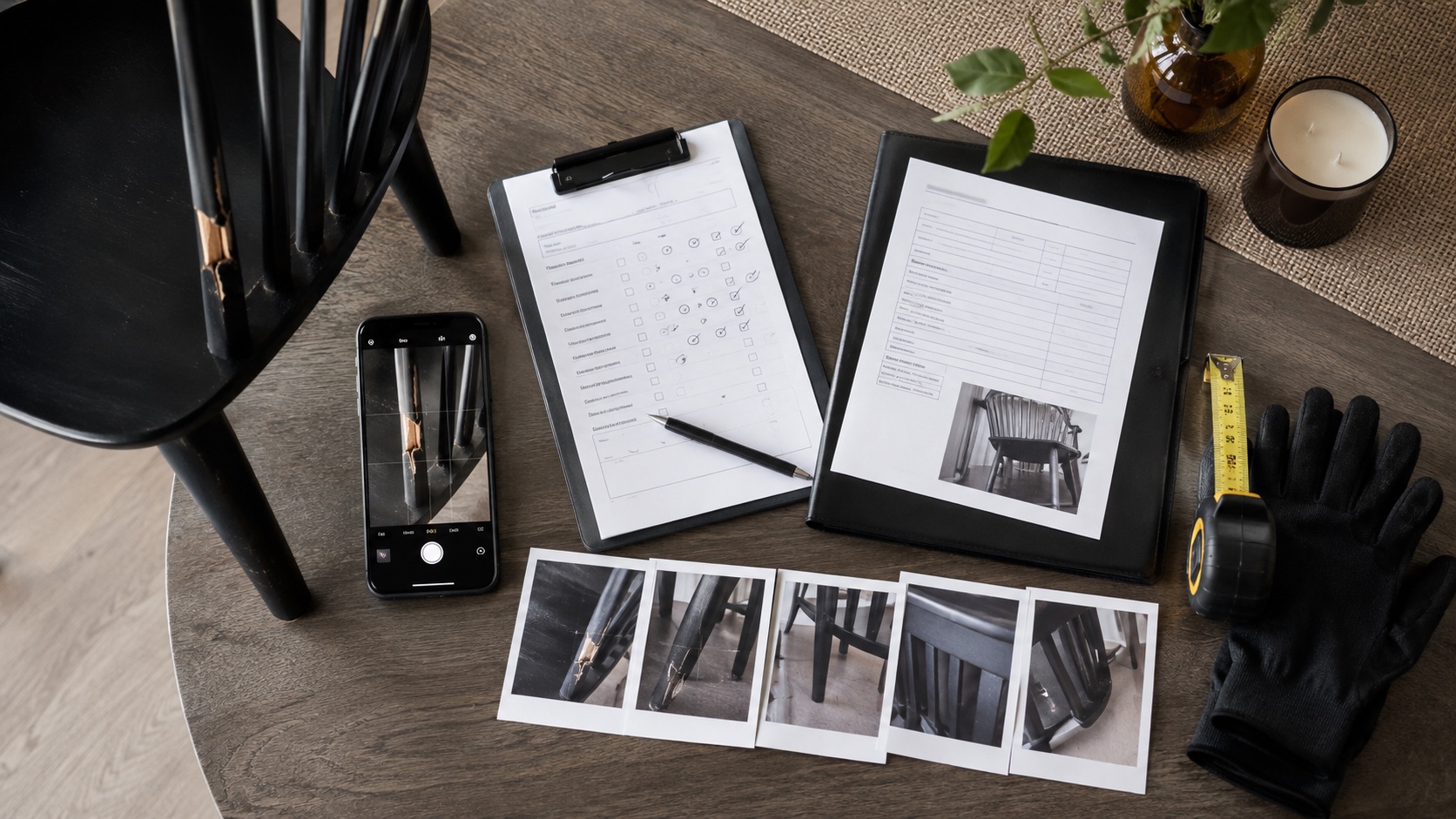
A strong Airbnb damage claim connects a specific reservation to a specific loss with clear, time-stamped evidence and a reasonable repair or replacement amount. Photograph the condition promptly, preserve the damaged item, communicate through Airbnb, collect receipts or professional estimates, and submit the request within the current deadline.
This guide explains how hosts can document damage methodically without exaggeration. Host damage protection has terms, conditions, limitations, and exclusions; it is not a substitute for appropriate insurance.
What Is an Airbnb Damage Claim?
A damage claim is a reimbursement request for eligible loss connected to a stay. Airbnb’s Host Damage Protection overview says hosts should document damage with photos or videos, repair or cleaning estimates, and receipts, then submit a reimbursement request through the Resolution Center within 14 days of the responsible guest’s checkout.
Airbnb’s current Host Damage Protection Terms contain the controlling conditions. They describe evidence that may be requested, including the time, cause, origin, ownership, condition, and amount of the loss. Read the terms applicable to your location and claim date instead of relying only on an informal checklist.
What Evidence Should a Host Collect?
- Wide photographs: show where the item or affected area is located in the property.
- Close photographs: show the damage, stain, missing component, or broken mechanism clearly.
- Video: demonstrate movement, leakage, unusual noise, failure to power on, or another issue that a still photo cannot show.
- Before-stay records: use dated turnover or inspection photos to establish prior condition.
- Purchase evidence: retain receipts, order confirmations, model information, and acquisition dates.
- Repair estimates: request a written, itemized estimate from a qualified provider.
- Cleaning invoices: separate normal turnover from unexpected additional work.
- Message history: keep relevant communication on the Airbnb platform.
- Incident timeline: record checkout, discovery, inspection, contact, mitigation, and submission times.
One dramatic close-up is rarely enough. A reviewer should be able to understand what the object is, where it was, its earlier condition, what changed, and how the requested amount was calculated.
How to Document an Airbnb Damage Claim Step by Step
1. Protect people and prevent further loss
Address hazards first. Shut off water when safe, restrict access to a dangerous area, and arrange emergency repairs when necessary. Preserve the damaged property where practical and record any action taken. Safety is more important than creating perfect evidence.
2. Photograph before cleaning or moving items
Capture the room from the doorway, then move closer. Include several angles and neutral lighting. Photograph serial numbers or model labels when relevant. Do not stage, alter, or worsen the damage.
3. Compare the pre-stay condition
Use a dated inspection routine for every turnover. Photos taken only after damage show the current condition but may not establish when it occurred. A consistent pre-arrival record makes the timeline easier to evaluate.
4. Review messages and operational records
Save relevant statements from the guest, cleaner, co-host, maintenance provider, or smart device alert, while respecting privacy and platform rules. Keep communication factual. Do not pressure the guest to admit fault.
5. Estimate repair before replacement
Ask whether the item can be repaired safely. Obtain a written estimate describing labor, materials, taxes, and the affected item. When replacement is necessary, use a comparable product rather than an unjustified upgrade.
6. Submit through the Resolution Center
Identify the responsible reservation, describe the loss in chronological order, state the amount requested, and attach organized evidence. Airbnb currently says the guest has 24 hours to respond before the host may involve Airbnb or its insurer when the guest declines, pays partially, or does not respond.
7. Respond promptly to follow-up questions
Keep the original evidence files and damaged property when possible. Airbnb may request additional information, records, proof of ownership, or inspection access under the applicable terms.
A Clear Claim Description Example
After reservation [reference] checked out on [date and time], our turnover inspection found the dining chair’s left rear leg split at the joint. The chair was intact in the dated pre-arrival inspection photo. Attached are wide and close photos, a short video showing the unstable joint, the original purchase receipt, and an itemized repair estimate from [provider]. The requested amount is the documented repair cost of [amount]. We asked the guest through the Resolution Center on [date].
The example is specific without being emotional. It does not speculate about intent or request more than the documented amount.
Create a Defensible Incident Timeline
A timeline helps connect the condition to the reservation and shows that the host acted promptly. Use exact timestamps when reliable, but do not create precision your records do not support. An example structure is:
- Before arrival: turnover inspection completed and dated condition photos stored.
- During the stay: relevant guest message, maintenance report, or incident notification received.
- Checkout: reservation ended at the scheduled time.
- Discovery: cleaner or inspector found the damage and stopped normal handling of the item.
- Documentation: wide photos, close photos, video, and identifiers captured.
- Mitigation: area made safe and further damage prevented.
- Valuation: repair professional inspected the item and issued an estimate.
- Request: reimbursement request submitted through the Resolution Center.
Keep the timeline consistent with image metadata, messages, cleaner logs, invoices, and access records. If a detail is unknown, label it unknown instead of guessing.
Organize Files So the Evidence Is Easy to Review
Use descriptive filenames and a simple index. For example: 01-room-overview.jpg, 02-chair-damage-closeup.jpg, 03-prestay-chair-condition.jpg, 04-repair-estimate.pdf, and 05-purchase-receipt.pdf. Keep original files in addition to compressed upload copies.
Add a one-page evidence index listing each attachment and what it demonstrates. Do not edit a photo in a way that changes the apparent condition. If you crop a copy for clarity, retain the original and disclose the purpose of the crop when relevant.
Coordinate Platform Protection With Insurance
A serious incident may involve the platform process, property insurance, liability coverage, a vendor warranty, or another responsible party. Review notification duties promptly because policies can impose different deadlines. Do not collect twice for the same loss, and disclose other coverage or recovery when the applicable terms require it.
Contact the appropriate insurer for high-value damage, structural issues, fire, water intrusion, bodily injury, theft, or any event that could create a larger claim. Preserve evidence and avoid signing releases or authorizing major non-emergency work before understanding relevant requirements. For legal or insurance questions, seek advice for the property’s jurisdiction.
How to Handle Low-Value Damage
Not every broken glass or worn towel justifies a claim. Compare the documented value, staff time, guest relationship, and whether the event reflects ordinary operational consumption. Establish a written internal threshold, but do not describe normal wear as guest damage merely to reach it.
For low-value recurring loss, the better solution may be sturdier inventory, spare items, clearer instructions, or a maintenance budget. Track patterns. Five similar failures may reveal a product or process problem even when no single incident warrants escalation.
How to Calculate a Reasonable Amount
Base the request on verifiable loss, not frustration or inconvenience. Use an itemized repair estimate, documented additional cleaning cost, or comparable replacement evidence. Account for age and condition when applicable; Airbnb’s terms may consider depreciation and actual cash value.
Keep these categories separate:
- Repair labor and materials
- Comparable replacement item
- Delivery or installation directly related to replacement
- Unexpected additional cleaning supported by an invoice
- Other eligible loss documented under the current terms
Do not add arbitrary administration fees, emotional distress, or inflated “penalties.” A precise amount supported by documents is easier to assess.
Damage, Wear and Tear, or Maintenance?
Not every defect discovered after checkout was caused by the guest. Normal aging, deferred maintenance, manufacturer failure, corrosion, and ordinary wear require a different response. Check the item’s age, maintenance record, earlier inspection photos, and type of failure.
| Observation | Possible interpretation | Useful evidence |
|---|---|---|
| Fresh impact mark and broken frame | Sudden physical damage | Before/after photos and repair report |
| Loose hinge with gradual wear | Maintenance or wear | Age, service history, technician assessment |
| Large new stain after checkout | Unexpected cleaning or damage | Turnover photos and itemized cleaning invoice |
| Appliance stops working without visible damage | Cause uncertain | Diagnostic report, model age, prior service history |
If the cause is uncertain, say so. A technician’s diagnosis is stronger than guessing.
Common Reasons Claims Become Weak
- Missing the deadline. A complete process started too late may become ineligible.
- No pre-stay condition record. Post-stay photos alone may not establish timing.
- Inflated replacement choice. Replacing a basic used item with a premium new model is difficult to justify.
- No itemized estimate. A round number in a message is not strong cost evidence.
- Confusing normal cleaning with extra cleaning. Document the additional work and why it was unexpected.
- Emotional or contradictory messages. Keep communication professional and consistent.
- Discarding the item too soon. The reviewer may need more evidence or an inspection.
- Treating protection as insurance. Coverage and exclusions differ; maintain appropriate insurance.
Build a Damage-Documentation System Before the Next Stay
Create a repeatable inspection rather than improvising after a loss. Photograph high-value items, vulnerable furniture, walls, floors, appliances, and access points. Store receipts and model numbers in a property inventory. Assign responsibility for post-checkout inspection and escalation.
A useful folder structure is:
- Property inventory and receipts
- Maintenance and repair history
- Pre-arrival inspection by reservation
- Post-checkout inspection by reservation
- Incident evidence and estimates
- Resolution Center submissions and decisions
PainHost’s Breezeway review explains how inspection and maintenance workflows can be organized digitally. For risk planning beyond platform protection, review the guide to short-term rental insurance.
Airbnb Damage Claim Checklist
- Make the area safe and prevent additional damage.
- Record wide, medium, and close photographs.
- Capture video when movement or function matters.
- Locate dated pre-stay condition evidence.
- Keep relevant communication on Airbnb.
- Preserve the damaged item when practical.
- Find the purchase receipt, model, and age.
- Obtain an itemized repair, replacement, or cleaning estimate.
- Calculate only the documented amount.
- Check the current terms and submission deadline.
- Submit through the Resolution Center.
- Save all original files and respond to follow-up requests.
Frequently Asked Questions
How long does a host have to file an Airbnb damage request?
Airbnb’s current overview says hosts should submit the reimbursement request within 14 days of the responsible guest’s checkout. The detailed terms contain additional requirements and timelines, so verify the version applying to your claim immediately.
What happens after a host requests reimbursement?
Airbnb currently states that the guest has 24 hours to respond. If the guest declines, pays partially, or does not respond, the host may be able to ask Airbnb or its insurer to review the request.
Do hosts need receipts?
Receipts are strong evidence of ownership, age, and value. When an original receipt is unavailable, review the current terms for acceptable alternatives and provide other verifiable proof rather than inventing an amount.
Can a host claim for extra cleaning?
Some unexpected additional cleaning may be eligible under the current Host Damage Protection terms. Separate it from normal turnover and provide photos, invoices, and an explanation of the additional work.
Does AirCover replace short-term rental insurance?
No. Airbnb explicitly describes Host Damage Protection as not being an insurance policy. Hosts should evaluate appropriate property, liability, and short-term rental coverage for their circumstances.
Should a host contact the guest before filing?
Use the Resolution Center process and explain why you believe the guest is responsible, supported by the available evidence. Keep the message factual and give the guest the opportunity provided by the platform to respond. Do not demand an admission or use threats.
Can screenshots be used as evidence?
Screenshots can preserve relevant messages or records, but keep the original source whenever possible. A screenshot without context may be difficult to verify. Include the reservation reference, date, and surrounding information needed to understand what the image shows.
What if the next guest is arriving soon?
Make the property safe and document the original condition before repairs or cleaning. If urgent work is required, photograph each stage, keep removed parts when practical, and obtain an itemized invoice. Do not delay a necessary safety repair merely to preserve the scene.
Should hosts charge a guest for accidental damage?
Base the decision on eligibility, evidence, value, and the applicable terms—not on whether the act was intentional. Accidental damage can still create a real loss, while normal wear or maintenance remains the host’s responsibility. Use a consistent internal policy.
What if more than one stay could have caused the damage?
Do not assign responsibility without evidence. Review dated inspections, cleaner notes, access records, and messages. If the timing cannot be established reliably, document the maintenance issue and improve future before-and-after inspections instead of making an unsupported accusation.
Final Takeaway
The most effective Airbnb damage claim is an organized evidence package, not an angry accusation. Document the condition before and after each stay, act within the current deadline, request a supportable amount, and preserve the records Airbnb may need to review.

Artigos Relacionados


Sobre o Autor

0 Comentários