Vacation Rental Emergency Plan: Evacuation, Contacts, and Guest Instructions

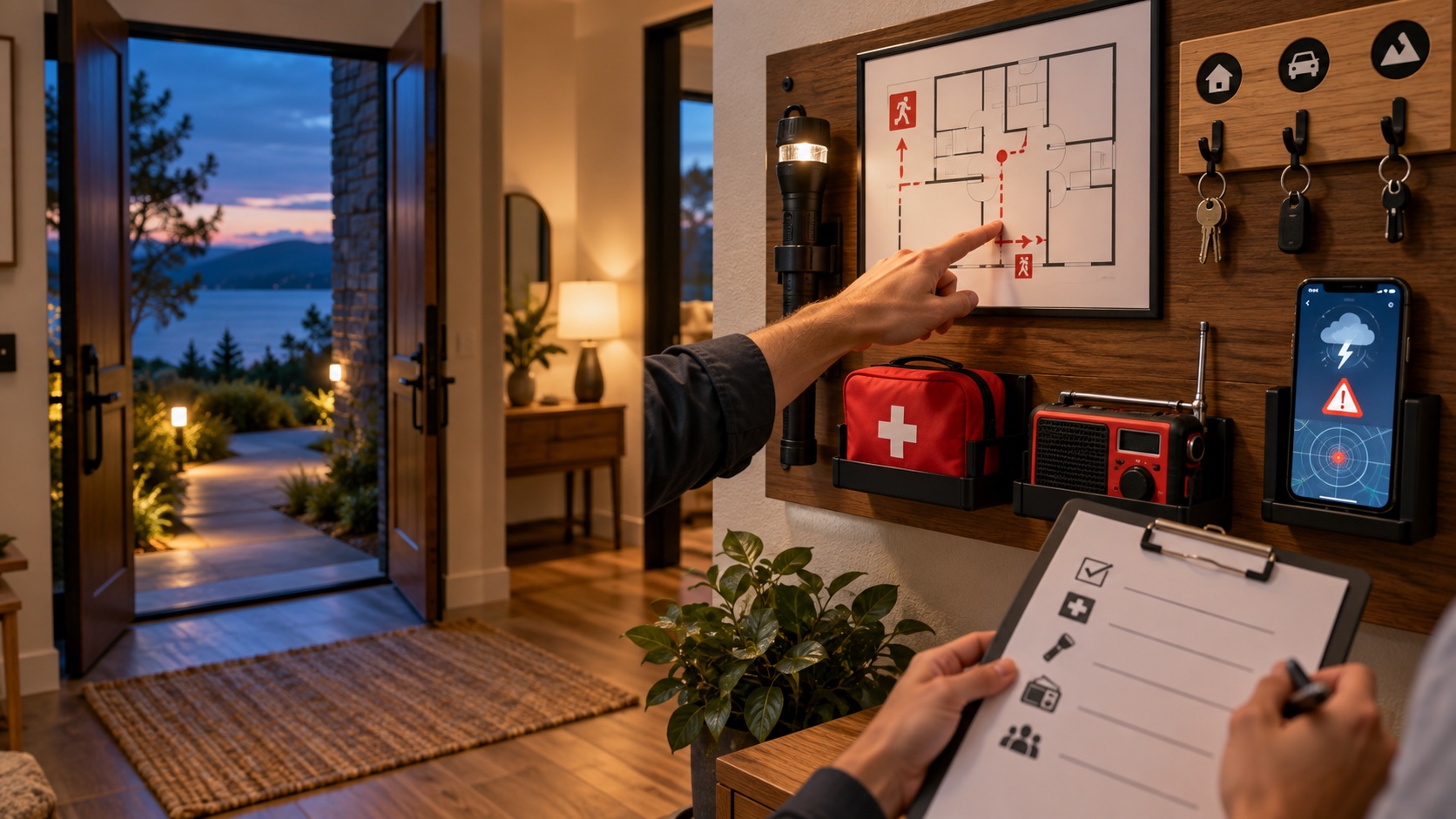
A vacation rental emergency plan is a property-specific guide that tells guests, hosts, co-hosts, and vendors what to do, whom to contact, and where to go when an urgent incident occurs. It should cover local hazards, emergency numbers, evacuation and shelter instructions, utility shutoffs, communication responsibilities, and a clear handoff to professional responders.
This guide shows Airbnb and short-term rental operators how to build a practical plan, place the right information in the property, train backup contacts, and test the process without overwhelming guests. The goal is not to predict every crisis. It is to make the first safe action obvious when time and attention are limited.
What is a vacation rental emergency plan?
A vacation rental emergency plan is a written and tested response framework for incidents such as fire, severe weather, power loss, water leaks, gas odors, medical emergencies, access failures, and mandatory evacuation. It combines guest-facing instructions with a more detailed operating plan for the hosting team.
The guest version should be short, visible, and easy to follow. The operator version can include utility locations, vendor contacts, insurance details, decision roles, documentation steps, and recovery tasks. These two layers prevent guests from seeing irrelevant operational data while ensuring the response team has what it needs.
Airbnb’s safety requirements for homes state that hosts should address known hazards, maintain a safe space, communicate relevant property features, and comply with applicable safety laws. Airbnb also recommends emergency contact information, working alarms, maintained safety equipment, and a clearly marked escape route in its hosting safety guidance.
Why a generic emergency sheet is not enough
A downloaded template may provide useful headings, but it cannot identify the correct assembly point, local emergency number, locked gate, flood-prone road, gas shutoff, building procedure, or backup contact for a specific property. A plan becomes useful only after those details are verified on site.
Vacation rentals create an additional challenge: the people inside may have arrived hours earlier. They may not know the street, building layout, local language, weather patterns, or location of safety equipment. Instructions must therefore work for a first-time visitor under stress.
A complete plan also protects continuity. If the primary host is unreachable, a co-host or local contact should be able to identify the reservation, communicate with the guest, authorize urgent work within a defined limit, and document what happened.
Start with a property-specific risk assessment
Build the plan around credible local hazards, not an endless list of dramatic scenarios. Walk through the home and surrounding area, review local government guidance, and ask what could require immediate evacuation, sheltering, professional assistance, or utility isolation.
Map the physical risks
Inspect exits, stairs, balconies, fireplaces, grills, pools, hot tubs, generators, fuel-burning appliances, electrical panels, water shutoffs, and any shared building areas. Record obstacles that could slow an evacuation, including gates, elevators, narrow paths, locked doors, or seasonal snow.
Known hazards should be corrected before accepting reservations. A plan does not make an unsafe condition acceptable. Use the vacation rental maintenance log to connect safety inspections, repairs, responsible vendors, evidence, and verified follow-up.
Identify location-based hazards
Coastal homes may need hurricane, tsunami, or storm-surge instructions. Mountain properties may face wildfire, snow, landslide, or limited cellular coverage. Urban apartments may rely on building alarms, fire stairs, security desks, or instructions issued by building management.
Use official local sources to confirm evacuation zones, alert systems, shelters, emergency numbers, and seasonal risks. Do not copy unofficial social media advice into the plan. Conditions and official directions can change during an event.
Consider guest accessibility
Ask whether the route works for a guest with limited mobility, impaired vision or hearing, children, or an assistance animal. Describe steps, slopes, heavy doors, and areas of refuge accurately in the listing. Never promise an accessible evacuation route that has not been assessed.
The essential parts of a vacation rental emergency plan
1. Verified emergency contacts
List the local emergency service number, property address, nearest appropriate emergency facility, host contact, backup local contact, building management or security contact, and relevant utility emergency lines. Verify each entry periodically rather than copying numbers from an old guidebook.
Display the complete property address prominently. A stressed guest may not remember the listing name, unit number, building entrance, or neighborhood. Include access details that responders may need, but do not publicly expose door codes or security-sensitive information.
2. Evacuation routes and assembly point
Create a simple floor plan showing the guest’s location, primary exit, alternate exit where available, stairs, and outside assembly point. Keep the route clear and use symbols that remain understandable across languages. For a multi-unit building, align the plan with official building procedures.
The assembly point should be far enough from the structure and should not block emergency vehicles. Avoid a location that could become unsafe during the property’s primary local hazard, such as a low area subject to flooding.
3. Shelter instructions
Some hazards require guests to stay inside rather than evacuate. Identify the safest practical interior location for the relevant local threat and explain how guests will receive official alerts. Do not give universal advice: the appropriate action depends on the hazard and instructions from local authorities.
Ready.gov organizes preparedness around making a plan, receiving emergency alerts, and building an emergency supply kit. Hosts outside the United States should use the equivalent official civil-protection and weather services for their country and locality.
4. Safety equipment locations
Show where guests can find the first-aid kit, fire extinguisher, flashlight, emergency radio, and other relevant equipment. The plan must match the actual property. Equipment should be visible or clearly identified, accessible, inspected, and maintained according to applicable rules and manufacturer instructions.
Do not encourage guests to fight a fire, enter a hazardous area, or perform a repair beyond their ability. The first instruction for an immediate threat should prioritize leaving danger and contacting professional emergency services.
5. Utility shutoff information
The operator plan should identify electrical, water, and gas controls, with photos and access instructions for authorized people. Guest instructions should be more limited. A guest should not be directed to enter a flooded electrical area, investigate a gas odor, or operate unfamiliar equipment.
Define the safe default. For example, if a guest smells gas, the response may be to leave without operating switches and call emergency services or the utility from a safe location. Exact instructions must come from the utility and local authority.
6. Communication and decision roles
Assign one primary incident lead and one backup. Decide who communicates with guests, emergency services, neighbors or building staff, property owners, vendors, booking platforms, and insurers. A role-based plan prevents five people from sending conflicting messages while a critical task remains undone.
Keep reservation communication on the booking platform when practical, but never delay an emergency call to create a message record. The guest messaging automation guide explains how to separate routine automation from human escalation.
How to write guest instructions that work under stress
Each instruction should answer one question: what is the safest next action? Use short sentences, numbered steps, strong headings, and familiar words. Put the action before background information.
A useful incident card can follow this pattern:
- Recognize: describe the warning sign, such as an alarm, visible smoke, water flowing, or an official evacuation notice.
- Act: state whether to leave, shelter, avoid a location, or call emergency services.
- Contact: provide the correct number and full property address.
- Account: direct the group to the assembly point and tell them not to re-enter until authorities say it is safe.
- Notify: ask the guest to contact the host once safe.
Translate critical instructions for the guests you regularly serve, and have a fluent reviewer check them. Icons can support comprehension but should not replace essential text. Avoid tiny print, QR-only access, or instructions that require a working internet connection.
Where to place the emergency information
Use multiple channels because any single one can fail. Place a concise physical card near the main entrance and the appropriate evacuation map in a visible location. Add the information to the digital welcome book, pre-arrival message, and operator runbook.
Digital information is easy to update, while printed information remains available during a Wi-Fi outage or dead phone battery. Keep the content consistent. If the physical card says to call one person and the digital guide names another, guests may lose time.
Do not bury emergency instructions among restaurant recommendations. Create a clearly named safety section that guests can find in seconds. Provide a brief orientation at check-in for properties with unusual exits, remote access, generators, pools, fireplaces, or severe seasonal hazards.
Build an operator response workflow
Confirm immediate safety
When a report arrives, first determine whether anyone faces immediate danger and whether emergency services have been contacted. Do not diagnose medical conditions, fires, gas leaks, electrical hazards, or structural damage remotely. Direct guests toward qualified emergency help and away from the hazard.
Open an incident record
Record the time, reservation, people involved, reported facts, actions taken, messages, responding authority, vendors, and next decision time. Separate observations from assumptions. Preserve relevant photos and platform messages without requesting that guests take risks to collect evidence.
Decide whether the property remains habitable
Only a qualified authority or professional should clear conditions outside the host’s expertise. If the home cannot be occupied safely, communicate available options promptly and follow the booking platform, insurance policy, contract, and applicable law. Review the short-term rental insurance checklist before an incident so notice requirements and exclusions are understood.
Control access and recovery
After the immediate danger passes, secure the property, arrange approved inspections, notify the necessary parties, and document repairs. If access codes or keys were exposed during the response, replace them. The smart-lock guide for Airbnb hosts covers code lifecycle and backup access.
Practical example: a nighttime water leak
A guest reports water spreading from beneath an upstairs bathroom vanity. The guest card tells them to avoid electrical fixtures and wet areas, move everyone away from the affected room, and call the host. If there is electrical danger or a collapsing surface, the instruction is to leave and contact emergency services.
The on-call host checks immediate safety, asks only necessary questions, and contacts the approved emergency plumber. The operator runbook identifies the main water shutoff, but the guest is asked to use it only if it is safely accessible and the instruction has been explained in advance. Otherwise, the local contact or plumber handles it.
The host records times, photos supplied from a safe position, affected rooms, vendor findings, and guest communication. The property is not returned to service until water, electrical, structural, and moisture concerns are evaluated as appropriate. The incident then becomes a maintenance and prevention task, not merely a closed message thread.
Common emergency-planning mistakes
- Using an unverified template: generic numbers and routes may be wrong for the property.
- Depending only on a QR code: power, cellular service, Wi-Fi, or the guest’s phone may be unavailable.
- Writing one plan for every property: exits, hazards, utilities, contacts, and local procedures differ.
- Giving unsafe technical directions: guests should not investigate gas, electricity, fire, or structural hazards.
- Failing to name a backup: an emergency cannot wait for one host to wake up or regain service.
- Mixing advice with facts: clearly distinguish official instructions, observed conditions, and host decisions.
- Forgetting updates: vendor numbers, building procedures, road access, and equipment locations change.
- Treating documentation as the first priority: life safety and professional assistance come before photos or claims.
Vacation rental emergency plan checklist
- List credible property and location hazards.
- Correct known hazards and document completed work.
- Verify the full address and local emergency numbers.
- Name the primary incident lead and an available backup.
- Map the primary exit, alternate route, stairs, and assembly point.
- Document official shelter and evacuation guidance for local hazards.
- Mark safety equipment and inspect it on schedule.
- Photograph utility controls for the authorized operator runbook.
- Create short guest action cards for the most credible incidents.
- Publish consistent instructions in print and digital formats.
- Confirm that cleaners, co-hosts, and vendors know their roles.
- Run a tabletop test using one realistic scenario.
- Correct gaps and record the revision date.
- Review after property changes, incidents, and official guidance updates.
Frequently asked questions
What should be included in a vacation rental emergency plan?
Include the property address, emergency and backup contacts, credible hazards, evacuation route, assembly point, shelter guidance, safety equipment locations, communication roles, and operator response steps. Add utility and vendor details to the private operator version.
Should emergency information be printed or digital?
Use both. Printed instructions remain accessible during a network or power problem, while a digital guide is easier to update and can provide more detail. The key actions and contact information should match in every version.
How often should hosts update the plan?
Review it on a defined schedule and whenever contacts, property layout, equipment, local hazards, building rules, or official guidance change. Review it again after every real incident or exercise.
Should guests be told how to shut off utilities?
Only provide a guest action that is safe, simple, legally appropriate, and verified for that property. Do not send a guest into a hazardous area. Keep detailed shutoff information in the operator plan for trained local contacts and professionals.
Is an emergency plan the same as a house manual?
No. A house manual explains normal use of the property. An emergency plan prioritizes urgent safety actions, professional assistance, accountability, and recovery. The emergency section may appear inside the manual, but it must be easy to find immediately.
Does an emergency plan replace insurance or local compliance?
No. It supports preparedness but does not replace alarms, inspections, maintenance, building rules, fire codes, licensing obligations, insurance, or professional advice. Apply the laws and official guidance for the property’s jurisdiction.
Final recommendation
The best vacation rental emergency plan is short enough for a guest to use, detailed enough for a backup operator to continue, and specific enough to match the actual property. Start with verified hazards and contacts, make evacuation and communication responsibilities explicit, and test one scenario with the people who would respond.
Do not wait for a real incident to discover that the number is outdated, the map is unclear, or the only person with access is unavailable. Create the plan, place it where guests can find it, review it with your team, and connect every corrective action to your maintenance system.

Artigos Relacionados




Sobre o Autor

0 Comentários