EV Chargers for Vacation Rentals: Costs, Access Rules, and Guest Billing

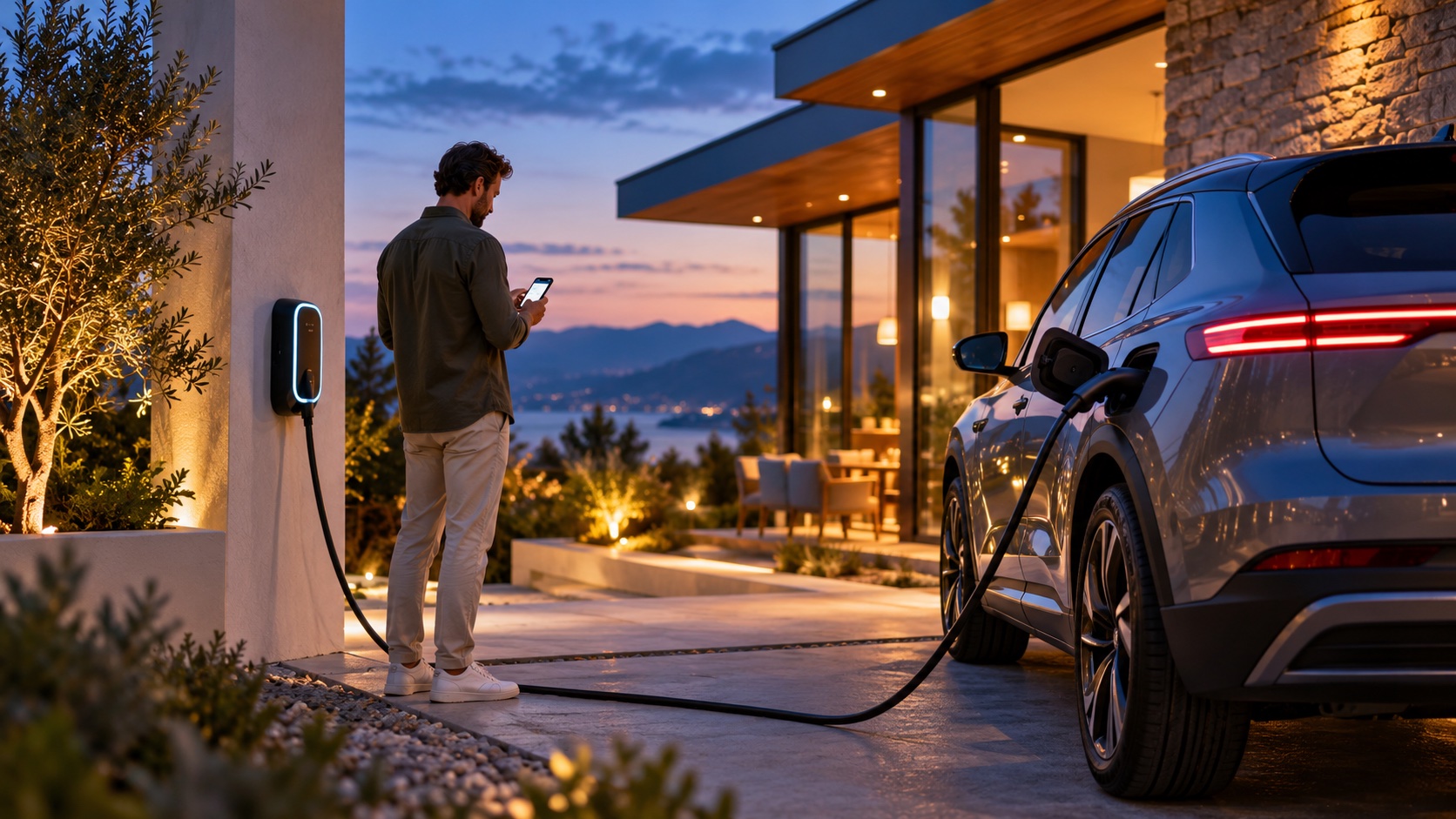
An EV charger can be a useful vacation rental amenity when the electrical system supports it, a qualified contractor installs it, guests understand connector and access limits, and the host has a plan for energy use, faults, parking, and billing. It is not a simple appliance that should be added through an extension cord or unverified outlet.
This guide explains charger levels, electrical assessment, connector compatibility, pricing, access control, listing disclosures, maintenance, and guest troubleshooting without promising more bookings or a fixed payback.
Is an EV charger right for the property?
Review guest demand, parking ownership, utility rates, electrical capacity, local permits, association rules, accessibility, weather exposure, and nearby public charging. A dedicated charger may add value at remote homes or long stays, while a property without assigned parking may not control access reliably.
Ask guests and analyze inquiries, but do not install solely because competitors have one. The amenity must be safe, available, and accurately represented.
Understand charging levels
The U.S. Department of Energy’s Alternative Fuels Data Center distinguishes Level 1, Level 2, and DC fast charging. Residential properties typically evaluate Level 1 or Level 2; DC fast equipment involves substantially different infrastructure.
Level 1 can use compatible standard-voltage equipment but may add range slowly. Level 2 uses higher-voltage equipment and normally needs a dedicated professionally installed circuit. Charging speed depends on circuit, equipment, vehicle, temperature, battery state, and onboard charger.
Hire qualified professionals
Have a licensed electrical contractor assess service capacity, panel condition, load, conductor route, grounding, protection, disconnects, equipment rating, permits, and code. The utility may need to review service or rate options.
Do not instruct guests to charge from an unverified outlet or extension cord. A receptacle that powers a small appliance may not be suitable for continuous vehicle charging.
Choose connector and cable access
Connector standards vary by vehicle and market. Decide whether the charger has an attached cable, socket, or approved adapter policy. Describe exactly what is provided and advise guests to verify compatibility with their vehicle.
Protect cables from vehicle paths, trip hazards, sharp bends, standing water, and unauthorized removal. Provide a cable holster and parking position that allows connection without stretching across a walkway.
Plan electrical load and other amenities
A property may already have HVAC, electric water heating, a pool, hot tub, cooking, laundry, and other major loads. The contractor may recommend load management, scheduled charging, a service upgrade, or a lower-current configuration.
Do not set arbitrary remote limits that strand a guest. Disclose the available charging power and any schedule before booking. Connect energy monitoring to the vacation rental utility management plan.
Decide whether charging is included or paid
Review platform rules, utility tariffs, tax, resale, metering, consumer law, and payment processing before charging separately for electricity. Some locations restrict resale or require particular disclosures and measurement.
Options may include charging included in the stay, a disclosed flat amenity fee, or metered billing through an approved system where lawful. Avoid cash requests or surprise post-stay charges. Use measured local costs rather than promising a universal price.
Control access
An unrestricted driveway charger may be used by neighbors or passersby. Available controls include app authorization, RFID, keypad, scheduled activation, or a physical location behind a controlled gate. Preserve a manual fallback if the vendor service or internet fails.
Remove former staff access, secure the administrator account, use multifactor authentication, and document who can start sessions or change power settings.
Write an accurate listing description
State:
- Whether charging is private, shared, included, or paid.
- Charger level and maximum configured output.
- Connector or socket type.
- Whether the guest needs an adapter or cable.
- Parking position, vehicle limits, and access hours.
- Whether charging can be guaranteed or is subject to availability.
- Who to contact for a fault.
Use current photographs of the parking space, charger, connector, and route. Do not advertise “fast charging” without a clear technical description.
Create guest instructions
- Park within the marked area without blocking access.
- Inspect the cable and connector for visible damage.
- Follow the approved start or authorization process.
- Confirm the vehicle indicates charging.
- Do not use adapters that the host has not approved.
- Stop charging before disconnecting when required.
- Return the cable to its holster.
- Report heat, odor, damage, water, or repeated faults immediately.
Maintain and inspect the charger
Follow manufacturer and contractor schedules. At turnovers, visually check the enclosure, cable, connector, mount, holster, signage, parking area, and error status. Test through the approved method at planned intervals.
Keep firmware and account security current without installing untested changes immediately before arrival. Document faults in the maintenance log.
Respond to charging problems
Ask for the vehicle charging status, charger indicator, connection sequence, and visible error—without asking the guest to open equipment or reset breakers repeatedly. Provide nearby public charging alternatives when possible.
Stop use for damaged cables, overheating, burning odor, arcing, water intrusion, impact, or electrical warnings. Arrange qualified inspection and update upcoming guests if the amenity is unavailable.
Common EV charger mistakes
Compare installation options
Ask contractors to quote the same scope: equipment, circuit, conductor route, trenching, mounting, weather protection, load management, permits, inspection, network setup, signage, bollards, and restoration of surfaces. A low quote may exclude work required to operate safely.
Evaluate service life, warranty, replacement parts, subscription, cellular or Wi-Fi dependence, data export, user authentication, and what happens if the manufacturer ends cloud support. A simple reliable unit may outperform a feature-rich charger that cannot be managed offline.
Design parking and physical protection
Locate the charger where vehicles can connect without blocking a sidewalk, accessible route, garage door, fire access, or another assigned space. Consider cable reach for vehicles with ports in different locations while preventing trip and vehicle-overrun hazards.
Use professional guidance for wheel stops, bollards, mounting height, drainage, snow, ice, flood exposure, heat, sunlight, and coastal corrosion. Photograph the finished parking position from the driver’s perspective.
Protect guest and vehicle data
Connected chargers may record account, session, energy, time, identifier, or vehicle-related information. Review what the vendor collects, where it is stored, who can view it, and how long it remains. Include relevant processing in the privacy notice.
Do not use charging logs to infer a guest’s movements beyond a legitimate operational or billing purpose. Restrict exports and remove former administrators.
Create a fair-use policy
For multi-unit or shared parking, define reservations, maximum session time, idle vehicles, queueing, and what happens when another user blocks the space. For a private home, explain whether only registered guests may charge and whether visitors require approval.
Do not remotely stop a session without considering vehicle needs and the disclosed policy. Contact the guest first unless an electrical or safety issue requires immediate shutdown.
Example guest charging journey
Before booking, the guest sees Level 2 service, configured output, connector type, assigned space, and whether energy is included. Before arrival, they receive a photo of the space and authorization steps. On arrival, the cable reaches the vehicle without crossing a walkway.
If the session fails, the guest uses a short troubleshooting card and contacts the host. The host can check device status but does not ask the guest to open the panel. A nearby public station is listed as a fallback. After checkout, the cable and enclosure are inspected.
Handle outages and damaged equipment
Define how the charger behaves after a utility outage, whether it restarts automatically, and whether load management reconnects correctly. Test the approved recovery method with the electrician or installer.
If a guest reports impact damage or a connector that will not release, keep people clear and use manufacturer or professional support. Do not force the cable, dismantle equipment, or energize damaged hardware.
Measure the amenity’s value
Track charging sessions, energy, support incidents, blocked-space complaints, maintenance, subscriptions, guest questions, and bookings that mention the charger. Compare these with operating costs and reliability.
A decision to retain, upgrade, or remove the charger should use real property data. Avoid attributing every reservation increase to one amenity.
Prepare cleaners and co-hosts
Staff should know how to recognize visible cable damage, return the connector to its holster, clear the parking space, and report an error. They should not open the unit, reset protective equipment repeatedly, or change current limits without authorization.
Include a photo of the correct final setup in the turnover checklist. If a departing guest remains connected past checkout, contact them and follow the disclosed parking process rather than unplugging or moving a vehicle without authority.
Plan for multiple vehicles and future changes
Some groups arrive with more than one EV. State whether the property has one charger, whether vehicles may alternate, and whether ordinary outlets are prohibited for charging. Do not let extra demand create unsafe adapters or cables across common areas.
Connector standards, vehicle software, incentives, and utility tariffs change. Review compatibility and listing language periodically. When replacing equipment, update photographs, instructions, access controls, privacy notice, and electrical records before the next stay.
Coordinate with solar and battery systems
Solar generation or a home battery does not automatically mean unlimited vehicle charging or outage backup. Ask the system designer which loads are backed up, how charging affects reserve capacity, and how load management behaves when the grid fails.
Describe only verified capability. A guest should not assume the EV charger works during an outage because the listing mentions solar panels.
- Installing without an electrical load assessment.
- Using an extension cord or unverified receptacle.
- Advertising a connector that not all guests can use.
- Leaving a cable across a walkway.
- Adding undisclosed energy charges.
- Depending entirely on cloud access.
- Ignoring association, insurance, permit, or utility rules.
- Promising a charging speed without conditions.
EV charger checklist for vacation rentals
- Measure guest need and parking control.
- Review permits, association, insurer, and utility rules.
- Obtain a licensed electrical assessment.
- Select listed equipment and compatible connector strategy.
- Design safe cable and vehicle placement.
- Choose transparent access and billing rules.
- Secure accounts and preserve a fallback.
- Photograph and describe the amenity accurately.
- Inspect and document maintenance.
- Prepare troubleshooting and public-charging alternatives.
Frequently asked questions
Should a vacation rental install Level 1 or Level 2 charging?
The choice depends on electrical capacity, guest stays, parking, vehicle needs, budget, permits, and utility service. A qualified contractor should assess the property.
Can hosts charge guests for electricity?
Possibly, but platform, utility, metering, tax, and consumer rules vary. Disclose the method before booking and obtain qualified local advice.
Can guests use an extension cord?
Do not permit improvised charging. Provide professionally assessed equipment and follow vehicle, charger, electrical, and local requirements.
Does an EV charger increase bookings?
It may help some travelers, but no result is guaranteed. Track inquiries, use, costs, reviews, and maintenance rather than relying on a general claim.
What if the charger is offline?
Troubleshoot safely, provide nearby alternatives, update the listing when necessary, and follow the platform process for a material unavailable amenity.
Final recommendation
Install an EV charger only after the electrical system, parking, access, and billing model are clear. Use qualified professionals, describe compatibility precisely, secure the account, and maintain a safe cable route.
Before publishing the amenity, complete a real charging session with a compatible vehicle and verify the entire guest journey from parking to disconnection.

Artigos Relacionados



Sobre o Autor
