How to Reduce Vacation Rental Cleaning Complaints

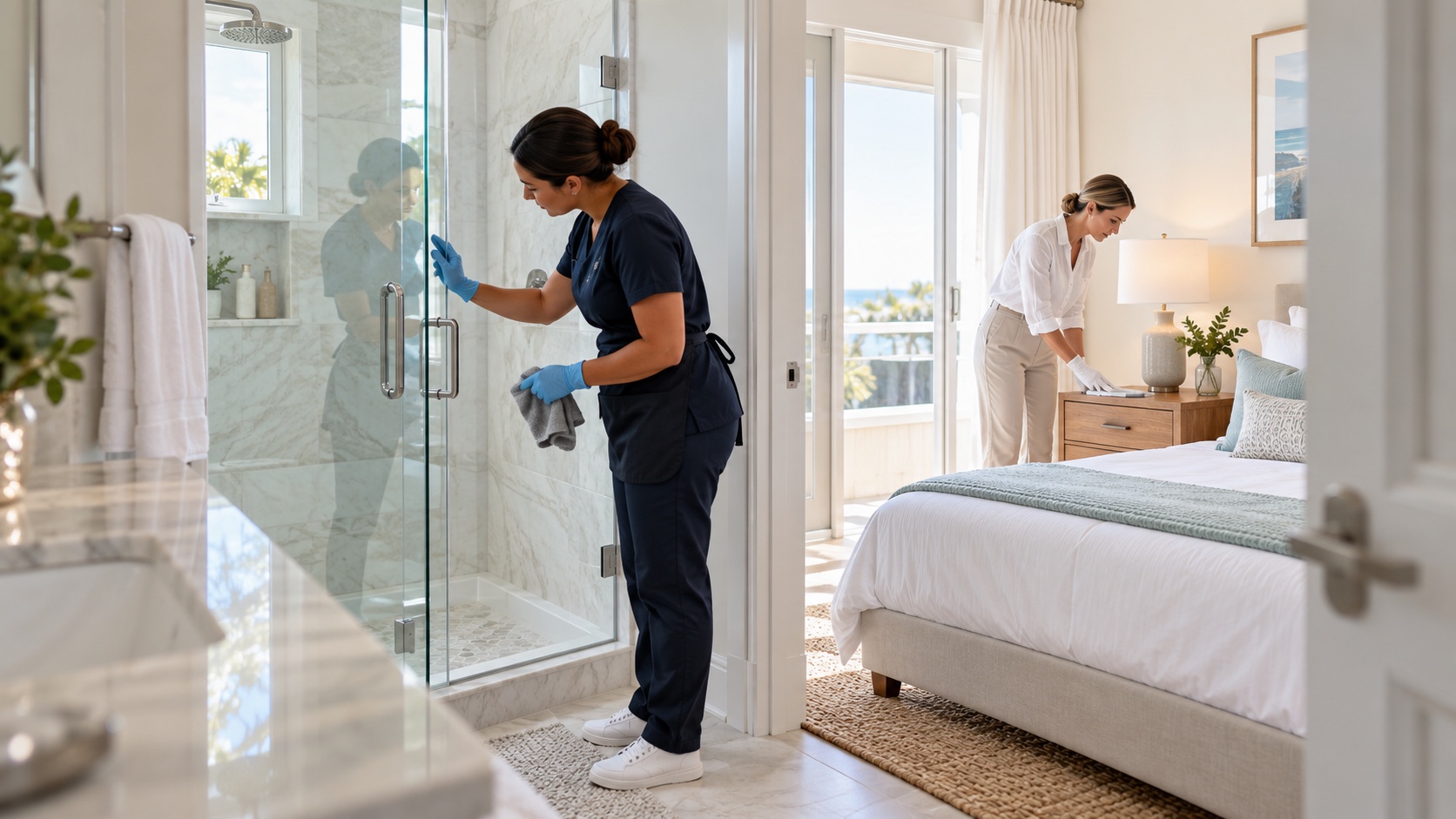
To reduce vacation rental cleaning complaints, hosts need a property-specific cleaning standard, enough turnover time, trained teams, independent inspection, clear evidence, and a fast guest-recovery process. Asking cleaners to “make it spotless” is not a standard because different people will interpret it differently.
This guide explains how to identify complaint patterns, improve room-level procedures, manage linens and supplies, verify work without excessive photos, and respond professionally when a guest reports a problem.
Why cleaning complaints happen
Cleaning complaints usually come from one or more of five gaps:
- Standard gap: the expected result was not defined clearly.
- Execution gap: the cleaner missed or rushed required work.
- Inspection gap: the miss was not caught before arrival.
- Maintenance gap: stains, odors, mold, pests, drainage, or worn materials cannot be solved by routine cleaning.
- Expectation gap: photos, descriptions, fees, or messages implied a different condition or service.
Airbnb’s ground rules for home hosts say listings should be clean and free of health hazards before check-in. Airbnb specifically mentions turnover activities such as laundry, trash removal, vacuuming or sweeping, and wiping surfaces.
The goal is not zero comments forever. It is a process that prevents repeatable misses, distinguishes cleaning from maintenance, and resolves credible concerns quickly.
Build a property-specific cleaning standard
Define the finished condition, not just the action. “Clean shower” is vague. A better standard states that glass, tile, fixtures, drain area, shelf, floor edges, and seals are free from visible residue, hair, standing water, used products, and odor; the drain works; and the approved supplies are reset.
Create standards by room and surface. Include:
- Required cleaning and approved products.
- High-touch and high-visibility details.
- Items that must not be moved or treated with certain chemicals.
- Guest supplies and par levels.
- Damage, maintenance, pest, and lost-property escalation.
- Evidence required for critical or frequently missed areas.
The standard should match the property materials. Natural stone, wood, stainless steel, glass, upholstery, and specialty finishes may require different products and methods.
Separate cleaning from maintenance
A cleaner can remove surface soil. They cannot repair failed grout, replace a leaking seal, correct poor ventilation, remove permanent wear, fix a slow drain, or diagnose mold-like growth.
Create a “clean, repair, or replace” decision:
- Clean: removable soil or residue can be addressed with the approved method.
- Repair: the surface or system is damaged but remains serviceable after qualified work.
- Replace: wear, damage, odor retention, or hygiene makes continued use unsuitable.
Connect defects to the vacation rental maintenance log. Repeatedly asking a cleaner to remove a permanent stain creates wasted labor and recurring guest disappointment.
Allow enough turnover time
Estimate time from actual work: property size, beds, bathrooms, laundry model, kitchen use, outdoor amenities, travel, restocking, inspection, and correction. Add capacity for ordinary variation.
Do not reduce the cleaning window because a guest requests early check-in or late checkout unless the team confirms the standard can still be met. Use the separate early check-in and late checkout process to protect readiness.
If same-day turns repeatedly require rushing, change check-in times, checkout times, staffing, laundry, minimum gaps, or property scope. Pressure is an operating design problem, not a cleaner personality problem.
Standardize the room sequence
A consistent route reduces backtracking and forgotten areas. One example:
- Enter safely, ventilate as appropriate, and assess condition.
- Photograph and report damage, hazards, lost property, or unusual soil before moving it.
- Remove trash and collect linens using the approved handling method.
- Start laundry or stage items for the external service.
- Apply dwell-time products according to labels.
- Work from cleaner to dirtier areas and high to low where appropriate.
- Reset linens, supplies, furniture, and guest information.
- Complete a separate final inspection route.
- Lock, secure, and report property readiness.
The exact order depends on products and property. Follow chemical labels and occupational requirements. Never mix cleaning products. EPA’s Safer Choice program helps consumers and commercial buyers identify products that meet criteria for safer ingredients and performance.
Focus on the details guests notice first
Hair and fibers
Hair is highly visible on white linens, bathroom surfaces, drains, floors, and upholstery. Use dedicated final inspection tools and lighting. Check behind doors, beneath toilet edges, around beds, and on shower walls after surfaces dry.
Odor
Do not mask odor with heavy fragrance. Find the source: trash, drains, laundry, smoke, pets, moisture, HVAC, refrigerator, upholstery, or cleaning residue. Fragrance can also create sensitivity concerns.
Linens
Inspect for stains, hair, odor, tears, dampness, and mismatched pieces before making beds. Clean but permanently marked linen may still look unclean to a guest. Create a retirement standard and enough par stock to replace pieces without delaying turnover.
Kitchen residue
Check inside the refrigerator, microwave, oven where included, coffee equipment, toaster tray, drawers, dishware, handles, backsplash, and beneath small appliances. A polished counter does not compensate for a dirty cup.
Bathroom edges
Inspect seals, grout, drains, shower tracks, toilet hinges, baseboards, exhaust covers, and the area behind doors. Confirm drainage and ventilation because water retention can create repeated residue or odor.
Under and behind
Rotate deeper checks for spaces not fully serviced every turnover: under beds, sofa cushions, appliance sides, headboards, cabinet tops, vents, window tracks, and exterior furniture. Define the frequency instead of leaving “deep cleaning” as an undefined future task.
Design linen and laundry control
Track linens by property, size, type, and condition using the vacation rental inventory management system. Separate clean, used, stained, damaged, and quarantine stock physically.
Define:
- Approved wash, dry, and chemical procedures.
- Maximum load and equipment limits.
- How stains are identified and treated.
- When items are recleaned or retired.
- Packaging and transport for off-site laundry.
- Who verifies clean delivery counts.
Do not place damp linen into closed storage. Inspect owner closets for humidity, pests, and mixed stock.
Use independent final inspection
When possible, a lead cleaner, inspector, co-host, or manager should verify the finished condition. If the same cleaner performs the check, require a deliberate second route after tools and supplies are packed.
The vacation rental inspection checklist should verify the outcome rather than repeat every cleaning action. Prioritize critical, guest-blocking, and frequently missed items.
Require photos selectively:
- Made beds and overall room readiness.
- High-risk amenities or safety setup.
- Documented damage or unusual condition.
- Corrected failed items.
- Areas with recurring complaints.
Photos should be current and contextual. A close-up of one clean sink does not prove the bathroom is ready.
Train, pay, and communicate for the standard
Provide a property walk-through, written checklist, product guide, linen method, restocking map, and escalation contacts. Show examples of pass and fail conditions.
Compensation and schedule should reflect the defined work. Adding photos, laundry, inventory, grill cleaning, hot-tub checks, and maintenance reporting without adjusting time or agreement creates predictable quality problems.
Use one task channel for property work instead of mixing personal texts, platform messages, and verbal requests. Tools discussed in Turno for Vacation Rentals and the Breezeway review can support checklists, scheduling, and documentation.
Analyze complaints by cause
Create categories such as hair, linen, bathroom, kitchen, odor, floor, pet residue, dust, pest, trash, outdoor area, supply, and maintenance. Record the property, room, date, cleaner, inspector, guest evidence, response, and root cause.
Look for patterns:
- Same room across different cleaners: property or standard problem.
- Same cleaner across properties: training, time, or performance problem.
- Same issue on same-day turns: scheduling problem.
- Odor after vacancy: moisture, drain, HVAC, or pest problem.
- Supplies missing despite cleaning photos: inventory or receiving problem.
Do not publish staff blame in guest communication. Resolve the stay, then investigate internally.
Separate isolated misses from system failures
An isolated hair on a sink may require a targeted correction and checklist reminder. Repeated bathroom residue across several turnovers points to training, tools, inspection, or insufficient time. Complaints that appear only after long vacancies may indicate dust, drains, moisture, HVAC, or pests rather than the turnover cleaner.
Use a simple cause-and-action record: observable issue, immediate remedy, likely cause, owner, due date, and verification. Avoid closing the case with “cleaner notified.” The useful outcome is a changed process or property condition that can be checked.
Protect quality on same-day turnovers
Back-to-back stays reduce recovery time but do not reduce the promised standard. Confirm departure, cleaner access, laundry capacity, maintenance availability, inspection time, and the next guest’s access window before accepting optional timing changes. Keep spare linen and essential supplies on site or nearby so one damaged set does not delay readiness.
If the home cannot be completed and inspected safely, escalate early. A truthful update and controlled recovery plan are better than hiding the delay or allowing a guest into a partially cleaned property.
Respond to a cleaning complaint
Respond quickly, acknowledge the specific concern, and offer a practical next step. Do not begin by explaining that the cleaner is usually excellent.
- Thank the guest for reporting the issue.
- Ask for location and a photo only if easy and safe.
- Assess health, safety, and habitability.
- Offer recleaning, replacement items, maintenance, or another appropriate option.
- Confirm whether and when the guest permits entry.
- Keep communication in the platform thread when practical.
- Document completion and ask whether the specific issue is resolved.
- Review root cause after the stay.
Airbnb asks guests to communicate problems promptly and document issues. Hosts should follow current platform processes for reservation changes, refunds, and support rather than making unsupported promises.
Sample response
“I’m sorry the shower and towels were not ready to the standard promised. Thank you for telling us. We can deliver fresh towels and have the bathroom corrected between 2:00 and 3:00 p.m., or arrange another option if you prefer not to have anyone enter. Please let me know which works best. I’ve documented the issue with our team.”
The response names the problem, avoids argument, offers choices, and asks for access permission. Adjust the remedy to severity, guest needs, platform policy, and what the team can actually deliver.
Common cleaning-quality mistakes
- Using one generic checklist for different properties.
- Scheduling insufficient turnover time.
- Treating maintenance defects as cleaner failures.
- Using fragrance to hide odor.
- Keeping visibly worn linens in active stock.
- Requiring many photos but reviewing none.
- Adding tasks without adding time or compensation.
- Defending the team before resolving the guest’s issue.
- Closing the complaint without a root-cause action.
Cleaning complaint prevention checklist
- Define the finished condition for every room and surface.
- Use approved products and material-specific methods.
- Separate cleaning, maintenance, and replacement decisions.
- Measure realistic turnover time.
- Create a consistent cleaning route.
- Control linen condition and par levels.
- Train the team at the actual property.
- Perform a final readiness inspection.
- Require evidence for critical and recurring items.
- Categorize complaints and investigate patterns.
- Create a rapid guest-recovery workflow.
- Verify corrective work and update the standard.
Frequently asked questions
What are the most common vacation rental cleaning complaints?
Common categories include hair, stained or damp linens, bathroom residue, kitchen grease or dishes, dust, floors, odor, trash, pet residue, pests, and missing supplies. Track your own property data rather than assuming a universal ranking.
Should hosts refund a cleaning fee after a complaint?
There is no universal answer. Assess severity, evidence, ability to correct, guest impact, platform policy, and local law. Use the appropriate platform process and avoid promising a remedy you are not authorized to provide.
How many cleaning photos should be required?
Require enough to verify critical, high-value, and frequently missed standards. Every photo should have a reviewer or a clear record purpose. Excessive photography can consume time without improving readiness.
Can the cleaner also inspect the property?
Yes, especially in small operations, but separate the inspection mentally and procedurally. A second person is valuable for high-risk, recurring, or disputed items.
How often should a vacation rental receive a deep clean?
Set frequency from occupancy, property materials, climate, pets, amenities, and observed condition. Create rotating periodic tasks rather than relying on an undefined “deep clean” after quality deteriorates.
Final recommendation
Reducing vacation rental cleaning complaints requires a visible standard and an independent decision that the home is ready. Give the team enough time, separate cleaning from repair, control linens and supplies, and inspect the details guests notice.
When a complaint occurs, solve the guest’s immediate problem before debating the cause. Then use the evidence to improve the property, schedule, training, or checklist so the same miss is less likely to return.

Artigos Relacionados



Sobre o Autor
