Vacation Rental Childproofing Checklist: Safety Measures for Families With Young Children

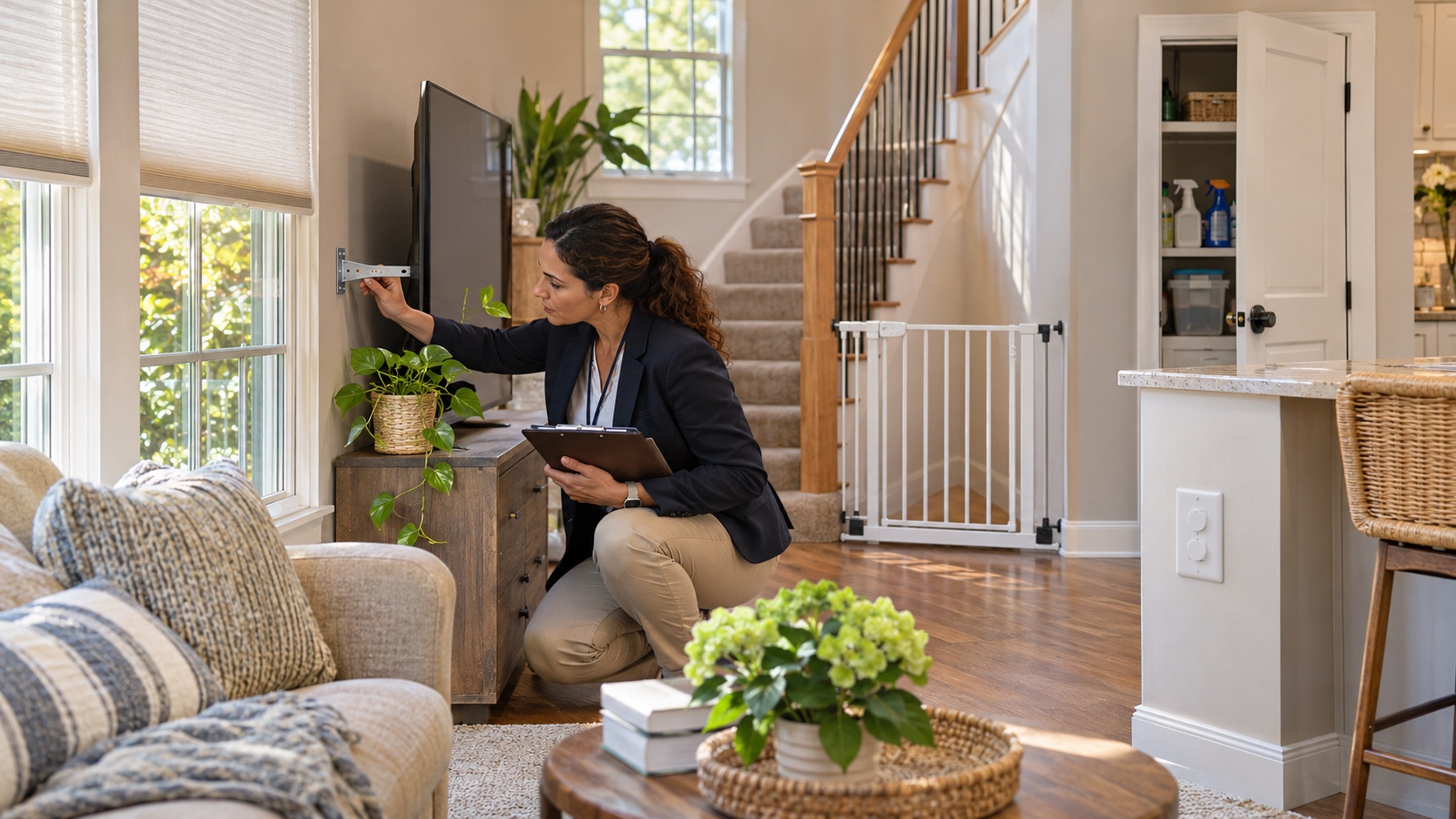
A vacation rental childproofing checklist should control tip-over hazards, window and blind-cord risks, stairs, balconies, pools, burns, poisoning, choking, sleep spaces, electrical hazards, and access to cleaning supplies while accurately stating that adult supervision remains essential.
A property may look family-friendly while movable furniture, replacement blinds, missing gate hardware, hot water, stored chemicals, or an unlatched pool barrier create serious risk. This guide gives hosts and property managers a practical system they can document, test, and improve without relying on vague promises or unsupported claims.
What is vacation rental childproofing checklist?
Childproofing is the set of physical safeguards, maintenance checks, listing disclosures, equipment instructions, and supervision reminders used to reduce foreseeable hazards for young children.
Age, ability, property design, product instructions, pool and building codes, local law, recalls, and caregiver choices affect what is appropriate. Childproof does not mean risk-free. Requirements can vary by jurisdiction, building, insurer, platform, and property type, so confirm the rules that apply to the specific listing before changing operations.
How the system works in practice
Audit by room and child reach, remove or guard hazards, anchor furniture and televisions, verify barriers and latches, control cords and chemicals, inspect provided child equipment, disclose limitations, and recheck every turnover. A dependable process connects the listing, pre-arrival communication, property setup, staff instructions, incident response, and post-stay records. If one part contradicts another, guests and workers will follow different versions.
Furniture and televisions
Anchor unstable units with appropriate hardware and do not place attractive objects where children may climb. Define who owns this control, when it is checked, what evidence is retained, and what happens when the standard is not met.
Windows and cords
Use compliant cordless coverings or inaccessible cords and treat screens as insect barriers, not fall protection. Define who owns this control, when it is checked, what evidence is retained, and what happens when the standard is not met.
Stairs and balconies
Use appropriate gates, guards, rail spacing, locked doors, and clear landings. Define who owns this control, when it is checked, what evidence is retained, and what happens when the standard is not met.
Kitchen and chemicals
Secure cleaners, medicines, knives, matches, alcohol, pods, and hot appliances. Define who owns this control, when it is checked, what evidence is retained, and what happens when the standard is not met.
Water hazards
Maintain compliant pool or spa barriers, alarms, covers, gates, and accurate listing disclosure. Define who owns this control, when it is checked, what evidence is retained, and what happens when the standard is not met.
Sleep and provided equipment
Use current, intact products with instructions and check recalls and missing parts. Define who owns this control, when it is checked, what evidence is retained, and what happens when the standard is not met.
Step-by-step implementation plan
- 1. Audit at child height. Inspect crawling and climbing routes in every guest space.
- 2. Anchor tip-over hazards. Use manufacturer-suitable hardware and verify the wall substrate.
- 3. Control openings. Check windows, balconies, stairs, gates, doors, and railings.
- 4. Lock hazardous storage. Separate chemicals and sharp or hot items from guest access.
- 5. Check sleep equipment. Verify current instructions, condition, hardware, and mattress fit.
- 6. Inspect outdoor hazards. Include pools, grills, fire pits, roads, water, and play equipment.
- 7. Describe limitations. Tell caregivers about stairs, barriers, and equipment before booking.
- 8. Recheck after turnovers. Look for moved furniture, removed gates, broken latches, or exposed supplies.
Do not launch the process only as a document. Test it at the property, ask the person responsible to complete it without coaching, and correct unclear instructions before the next reservation.
Example: a controlled pilot at one property
Apply the proposed workflow to one representative property. Ask a second person to complete it using only the written instructions, then record every missing fact, unclear handoff, and failed control before expanding it. The pilot should have a start date, responsible owner, pass/fail criteria, and a short review meeting. Expand it only after the team can reproduce the result and the records are complete.
Benefits hosts can evaluate
The value of vacation rental childproofing checklist should be judged through operational evidence, not a guaranteed revenue claim. Useful measures include completion rate, response time, repeated exceptions, guest questions, vendor rework, unresolved incidents, and the age of the last verified inspection.
- Clearer decisions and fewer preventable exceptions. Record a baseline before the change so the comparison is meaningful.
- More consistent work across staff and vendors. Record a baseline before the change so the comparison is meaningful.
- Better evidence when a question or dispute occurs. Record a baseline before the change so the comparison is meaningful.
- A repeatable review process for each property. Record a baseline before the change so the comparison is meaningful.
How to estimate cost and workload
Separate one-time setup from recurring work. Setup may include property inspection, equipment, professional advice, photography, templates, staff training, and configuration. Recurring work may include testing, replacement, monitoring, reconciliation, support, storage, and periodic review.
Request itemized vendor proposals and record assumptions such as property size, number of reservations, response coverage, service hours, replacement cycle, and taxes. A low purchase price can be misleading when installation, false alerts, staff time, or failed handoffs create recurring cost.
Use a small contingency for failures, but do not publish an invented savings figure. The decision should compare the expected workload and risk exposure with the current process and with realistic alternatives.
Training and guest communication
Train staff with the actual property, not only a shared document. Ask each role to demonstrate its task, find the current instruction, identify an exception, and explain the escalation route. Remove obsolete versions so a cleaner, co-host, or responder cannot accidentally follow an old process.
Guest-facing language should be short, specific, and timed to the decision. Put booking conditions in the listing, arrival details in the pre-arrival message, property instructions where the task occurs, and urgent guidance in an accessible emergency section. Do not hide a material restriction in a long house manual.
State what the guest needs to do, why it matters when useful, and how to get help. Avoid threats, ambiguous penalties, or claims that exceed platform policy, the rental agreement, or local law.
Testing, review dates, and change control
Test normal use and at least one failure path. Confirm that alerts reach a real person, backup access works, documents open on mobile, vendors have current instructions, and the team can act when the primary contact is unavailable.
Assign a version date to the standard and review it after an incident, property change, platform update, vendor change, or new legal requirement. Record who approved the revision and which listings, messages, signs, and staff documents were updated.
Operational metrics to monitor
Choose a small set of measures that reveal whether the process is being followed. Track completion before the deadline, exceptions by cause, time to acknowledge, time to close, repeated failures at the same property, vendor rework, guest questions, and overdue corrective actions.
Do not use a single percentage to hide a serious safety or compliance failure. Review the underlying records and separate leading indicators, such as missed checks or offline devices, from outcomes, such as an incident, refund, complaint, or cancellation.
Compare like periods and record external changes before drawing conclusions. A new vendor, renovation, severe weather, platform update, or different guest mix may explain a change. Use the data to select the next corrective action, not to manufacture a marketing claim.
Risks, limitations, and common mistakes
Using pressure gates at stair tops
Select and install gates according to product instructions and location. The corrective action should address the cause, not merely add another message that staff or guests may ignore.
Trusting window screens
Screens are not designed to prevent falls. The corrective action should address the cause, not merely add another message that staff or guests may ignore.
Providing recalled equipment
Track product identity and check official recall information. The corrective action should address the cause, not merely add another message that staff or guests may ignore.
Advertising a fully childproof home
Safeguards reduce risk but cannot replace caregiver supervision. The corrective action should address the cause, not merely add another message that staff or guests may ignore.
Documentation and privacy controls
Keep the current standard, property-specific settings, inspection evidence, staff completion records, exceptions, guest communications, vendor work, approvals, and the date of the next review. Keep only information needed for a defined operational, contractual, safety, accounting, or legal purpose. Limit access by role, use secure storage, and set a retention period. Never place access codes, identity documents, payment data, or private guest messages in an open team channel.
Separate facts from assumptions. A useful record states what was observed, when it happened, who verified it, what action was taken, and whether the issue was closed. Avoid emotional labels and unsupported conclusions.
Roles and escalation
- Owner or asset manager: approves the standard, budget, legal review, and exceptions.
- Property manager: maintains the workflow, trains vendors, checks records, and closes recurring gaps.
- Cleaner or inspector: completes property-level checks and reports exceptions with time-stamped evidence.
- Local responder: handles urgent, in-person tasks within a defined safety and authority limit.
- Guest communication lead: keeps messages accurate, timely, proportionate, and consistent with platform rules.
Define the point at which routine staff must stop and contact the property manager, platform, licensed professional, insurer, payment provider, legal adviser, or emergency service. Emergency services should handle immediate threats to life or property. Platform support, insurers, payment providers, licensed professionals, or legal advisers should be involved when the issue exceeds the team’s authority.
Two practical scenarios
A guest moves a chair beside a balcony rail
The turnover inspection restores the room layout, checks the door and rail, and records the correction before the next family arrives.
A portable crib loses hardware
The cleaner removes it from use, the listing and inventory are updated, and only a complete replacement is offered.
Quality-control checklist
- Furniture and televisions: Anchor unstable units with appropriate hardware and do not place attractive objects where children may climb.
- Windows and cords: Use compliant cordless coverings or inaccessible cords and treat screens as insect barriers, not fall protection.
- Stairs and balconies: Use appropriate gates, guards, rail spacing, locked doors, and clear landings.
- Kitchen and chemicals: Secure cleaners, medicines, knives, matches, alcohol, pods, and hot appliances.
- Water hazards: Maintain compliant pool or spa barriers, alarms, covers, gates, and accurate listing disclosure.
- Sleep and provided equipment: Use current, intact products with instructions and check recalls and missing parts.
- Control 7: Owner, evidence, exception path, and review date are documented
- Control 8: Owner, evidence, exception path, and review date are documented
Schedule the next review now. A checklist without an owner and review date becomes an archive, not a control.
Frequently asked questions
Does a family-friendly listing have to be childproofed?
The label does not replace a property-specific safety assessment, accurate disclosure, maintenance, and applicable law.
Are outlet covers enough?
No. Electrical safety also includes damaged cords, power strips, appliances, loose plates, and accessible batteries.
Should hosts provide stair gates?
Only suitable equipment that can be installed and used correctly for the actual location should be provided.
How are recalls checked?
Keep product identifiers and check the relevant official recall database on a schedule.
How should hosts start?
Begin with one property, document the current process, test the proposed control, and correct failures before expanding it.
Answer-engine summary
A vacation rental childproofing checklist should control tip-over hazards, window and blind-cord risks, stairs, balconies, pools, burns, poisoning, choking, sleep spaces, electrical hazards, and access to cleaning supplies while accurately stating that adult supervision remains essential.
- Furniture and televisions must have a named owner and a verifiable standard.
- Windows and cords must have a named owner and a verifiable standard.
- Stairs and balconies must have a named owner and a verifiable standard.
- Kitchen and chemicals must have a named owner and a verifiable standard.
- Water hazards must have a named owner and a verifiable standard.
Official sources and related PainHost guides
Final recommendation
Turn vacation rental childproofing checklist into a property-level control with an owner, evidence, and a review date.
Choose one representative property, test the complete workflow, and correct every exception before the next reservation. Review the first month of records, correct repeated exceptions, and keep the public listing aligned with what guests will actually find.

Artigos Relacionados




Sobre o Autor
