Vacation Rental Pool and Hot Tub Safety: A Practical Checklist for Hosts

Vacation rental pool and hot tub safety requires secure access, maintained water quality, working equipment, accurate disclosures, clear guest rules, and a documented inspection before every arrival. A warning sign or waiver does not replace barriers, supervision, maintenance, or compliance with local health and building requirements.
This guide covers barriers, drain safety, rescue equipment, water chemistry, heating, electrical risks, guest communication, and incident response. Use qualified local professionals because codes and operating requirements vary.
Begin with permits, insurance, and local rules
Confirm whether the pool or spa requires permits, inspections, fencing, alarms, covers, signage, maximum temperatures, drain protection, electrical work, or commercial-style water testing. Review insurance coverage and exclusions with a licensed professional.
Do not assume a residential installation is automatically approved for short-term rental use. Record the authority contacted, inspection results, renewal dates, and corrective work.
Control access to the water
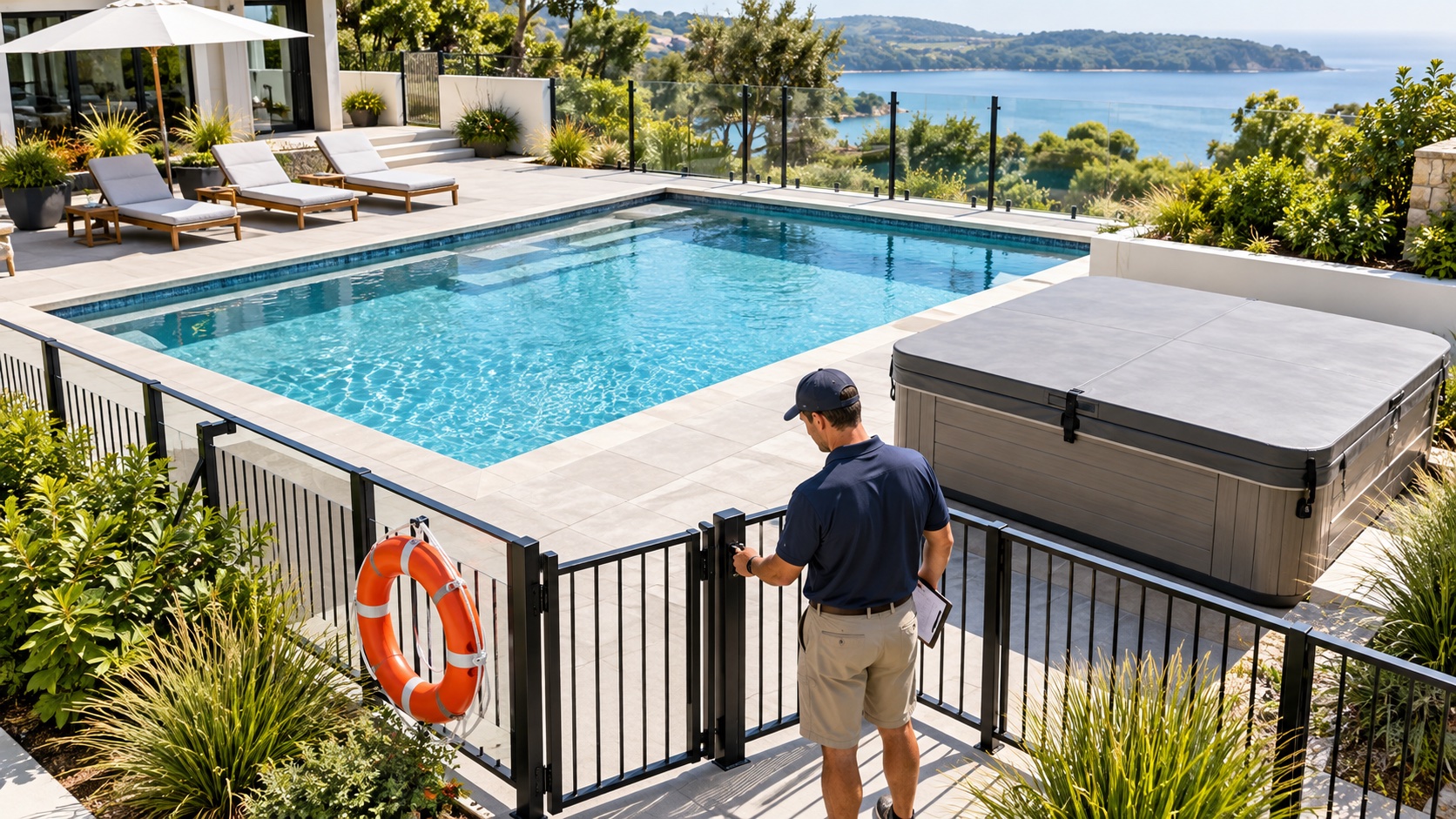
Airbnb’s host safety guidance recommends a four-sided pool fence with a self-closing, self-latching gate, plus alarms on doors and windows leading to the pool area. Local requirements may differ or be stricter.
Inspect every access point from a child’s perspective. Check gate closing force, latch height, gaps, climbable furniture, pet doors, landscaping, and objects that can prop a gate open. A motorized cover is not automatically a substitute for a compliant barrier.
Provide rescue and emergency equipment
Place approved reaching equipment, ring buoys where appropriate, first-aid supplies, and emergency contact information in visible, accessible locations. Keep the property address near the phone or posted safety information so guests can report it quickly.
Inspect equipment for damage, tangles, weathering, and obstruction. Decorative placement is not useful if a rescue pole is locked away or a ring cannot reach the water.
Prevent drain and entrapment hazards
Have a qualified pool professional verify drains, covers, suction systems, safety releases, and compliance with applicable standards. Close the amenity immediately if a drain cover is missing, broken, loose, or incompatible.
Do not allow guests or general maintenance staff to improvise a repair. Preserve equipment records, model numbers, inspections, and replacement dates.
Manage water quality consistently
Create a testing and service schedule based on local health requirements, manufacturer instructions, bather load, weather, and professional advice. Record readings, chemicals added, water clarity, temperature, service time, and who approved reopening.
Cloudy water, strong odor, surface contamination, or an equipment fault is not solved by adding an unmeasured amount of chemical. Keep guests out until a competent person verifies safe operation.
Control hot tub temperature and cover safety
Use equipment limits and local requirements rather than a copied temperature. Inspect the cover, locks, hinges, straps, steps, handholds, and surrounding surface. A damaged waterlogged cover can be difficult to move and may not provide the protection the listing claims.
Explain health-related restrictions without giving medical advice. Encourage guests with pregnancy, cardiovascular conditions, medications, or other concerns to consult an appropriate health professional.
Check electrical and equipment areas
Pumps, heaters, lights, controls, and nearby outlets require qualified installation and maintenance. Keep equipment rooms locked from guests while preserving responder access. Investigate repeated breaker trips, tingling sensations, damaged lights, exposed wiring, or unusual equipment noise immediately.
Do not place extension cords, speakers, chargers, or portable electrical appliances near water. Provide safe lighting for the route and deck.
Create clear guest rules
- Children and weak swimmers require active adult supervision.
- No diving where the area is not designed and approved for it.
- No glass in the pool or spa area.
- Keep gates closed and never disable alarms.
- Follow maximum occupancy and posted operating limits.
- Do not enter when the amenity is closed for service.
- Report cloudy water, missing covers, damage, or illness promptly.
Swimming aids and toys do not prevent drowning. Airbnb’s guidance encourages touch supervision for weak or non-swimmers and a designated, distraction-free “Water Watcher.”
Disclose the amenity accurately
State whether the pool or spa is private or shared, indoor or outdoor, seasonal, heated, fenced, covered, supervised, or subject to hours. Show barriers and access in photographs. Do not promise a precise temperature unless operations can reliably deliver it under stated conditions.
If a feature is unavailable, update the listing and upcoming guests. Follow the process in the Airbnb listing audit.
Run a pre-arrival inspection
- Verify gate and door controls close and latch.
- Inspect fences, covers, drains, steps, rails, and deck.
- Confirm rescue and first-aid equipment is present.
- Review water readings, clarity, and service record.
- Test lighting and visible alarms under approved procedures.
- Remove glass, trip hazards, damaged furniture, and electrical items.
- Confirm rules, address, and emergency contacts are legible.
- Close the amenity if a critical item fails.
Use the vacation rental inspection checklist to assign and verify corrective actions.
Respond to incidents and contamination
For immediate danger, direct guests to emergency services and follow the property’s emergency plan. Stop access, preserve facts, notify appropriate authorities, insurers, and platform support, and use qualified professionals.
After fecal, vomit, blood, chemical, electrical, entrapment, or injury incidents, do not reopen based only on appearance. Follow public-health, equipment, and professional protocols and document clearance.
Common pool and hot tub safety mistakes
Separate pool and hot tub operating plans
A pool and hot tub share water-related risk but should not use one generic checklist. Their temperature, circulation, disinfection, covers, occupancy, turnover, and guest behavior differ. Create separate equipment maps, service logs, closure criteria, and emergency contacts.
For shared amenities, identify the party responsible for maintenance and the host’s verification duty. A condominium service contract does not automatically ensure the listing information is current or that the amenity is open on arrival.
Control chemical storage and handling
Store chemicals in original labeled containers in a locked, ventilated area appropriate to the product. Separate incompatible chemicals and keep safety data and spill contacts available to authorized staff. Guests should not have access or be asked to correct water chemistry.
Train service personnel to measure rather than guess. Record delivery, storage condition, expiration where applicable, dosing, and disposal under local requirements. Never mix chemicals or place wet tools into dry product.
Plan for weather and seasonal closure
Lightning, high winds, extreme heat, freezing, wildfire smoke, flooding, and severe storms can make an outdoor amenity unsafe. Define who closes the area, how access is secured, how guests are notified, and what inspection is required before reopening.
Seasonal shutdown should include professional winterization or recommissioning, cover and barrier checks, updated listing availability, and messages to already booked guests. Do not leave “heated pool” selected when the system is intentionally closed.
Design safer nighttime use
Inspect lighting for paths, steps, depth changes, gates, controls, and equipment without producing glare that hides the water surface or disturbs neighbors. Verify timers and power-loss behavior. Keep decorative cords, portable lamps, and speakers away from water.
If the property cannot support safe nighttime use, publish and enforce closing hours. A rule should be supported by physical controls and a local response process, not a sign alone.
Manage accessibility without overstating it
Accurately describe steps, handrails, lifts, transfer equipment, deck surfaces, gates, and accessible routes. Inspect any lift or assistive equipment under manufacturer and legal requirements. Do not label the amenity accessible based solely on a handrail or wide gate.
Invite guests to ask about physical details and provide measurements or current photographs. The guest can then decide whether the setup meets their needs.
Example: water clarity problem before arrival
The inspector finds cloudy pool water two hours before check-in. The host closes and secures the pool, contacts the qualified service provider, documents the condition, and informs the guest that the home remains available but the pool is temporarily unavailable. The host follows platform and reservation procedures for the material amenity issue.
The pool is not reopened because a chemical was added or the surface looks better. It reopens only after required readings, circulation, clarity, equipment, and professional criteria are verified. The cause and prevention step are added to the maintenance record.
Measure amenity reliability
Track inspection completion, water exceptions, closure hours, gate failures, cover damage, guest questions, service callbacks, and complaints. Review whether listing promises match actual availability and whether the service schedule accounts for high-use periods.
Use the data to adjust staffing, parts inventory, service frequency, and booking disclosures. Do not hide closure rates to protect marketing; unreliable operation is a signal to repair, redesign, or stop advertising the amenity.
Coordinate turnover, service, and guest access
Pool service should not conflict with early arrival, late checkout, or guest use. Define the service window, access route, chemical wait periods, evidence, and who confirms reopening. Tell guests in advance when routine service will occur and obtain any required access permission.
During a same-day turnover, cleaners should report debris, broken glass, damaged furniture, missing rescue equipment, or gate problems immediately. They should not make chemical or mechanical decisions unless trained and authorized. The pool professional’s completion and the host’s readiness check are separate controls.
Review insurance and vendor contracts
Confirm liability, property, equipment, business interruption, and guest-use conditions with a licensed insurance professional. Review whether the service contract covers emergency attendance, water testing, parts, holiday schedules, and documentation.
Keep a qualified backup provider. A full booking calendar is not a reason to operate a pool or hot tub after the primary vendor becomes unavailable.
- Relying on house rules instead of physical barriers.
- Claiming a yard is secure without testing gates.
- Skipping water logs between service visits.
- Leaving rescue equipment locked or decorative.
- Allowing a damaged drain cover or hot tub cover to remain in use.
- Using unqualified staff for electrical or chemical decisions.
- Publishing old photos that hide layout changes.
- Reopening after an incident without verification.
Pool and hot tub safety checklist
- Verify permits, code, inspection, and insurance requirements.
- Secure every access point.
- Maintain drain and entrapment protection.
- Provide inspected rescue equipment.
- Test and document water quality.
- Maintain pumps, heaters, electrical systems, and covers.
- Post rules, address, and emergency actions.
- Inspect before each arrival and after severe weather.
- Close immediately when a critical condition fails.
- Document professional repair and reopening approval.
Frequently asked questions
Is a pool waiver enough?
No. A waiver does not replace applicable law, safe design, maintenance, barriers, accurate disclosure, or appropriate insurance. Obtain qualified legal advice for contracts.
Should a vacation rental provide life jackets?
Follow local requirements and professional guidance. If provided, supply appropriate sizes, inspect condition, and make clear that flotation equipment does not replace supervision.
How often should water be tested?
Frequency depends on local rules, system type, use, weather, and professional guidance. Document the schedule and add checks before arrivals.
Can guests adjust hot tub chemicals?
Guests should not make unmeasured chemical changes. Provide a contact for problems and keep chemicals secured according to manufacturer and regulatory requirements.
What if the pool gate does not latch?
Close access to the pool and arrange qualified repair. Do not rely on a message asking guests to hold the gate shut.
Final recommendation
Treat a vacation rental pool or hot tub as a controlled operating system, not a passive amenity. Secure access, maintain water and equipment, communicate limitations, and give staff authority to close it.
Before the next stay, walk the full route from the house to the water and test every barrier and critical device. Record the result and correct failures before guests arrive.
Artigos Relacionados



Sobre o Autor
