How to Respond to Negative Airbnb Reviews: 15 Templates for Hosts

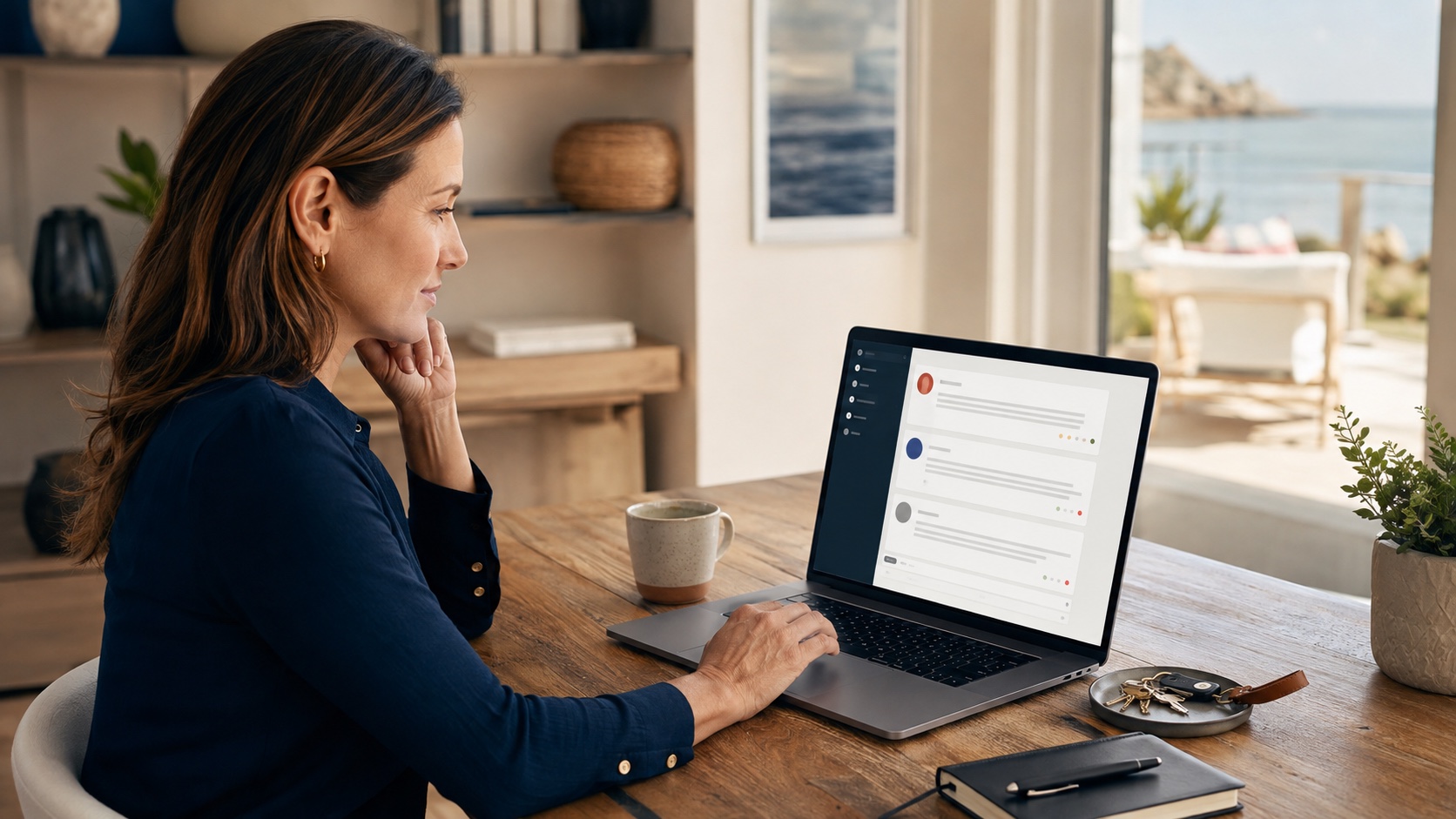
The best response to a negative Airbnb review is brief, factual, calm, and written for future guests—not as an argument with the reviewer. Acknowledge the useful part of the feedback, explain what changed when appropriate, and avoid revealing private details. A professional response cannot erase a disappointing stay, but it can show prospective guests how you handle problems.
This guide provides a practical decision process and adaptable Airbnb review response templates for common complaints. It also explains when to request removal, what not to write, and how to turn recurring criticism into an operational improvement.
Should Hosts Respond to Every Negative Airbnb Review?
Respond when your reply will clarify an important fact, demonstrate accountability, or reassure future guests. A response is especially useful when the complaint concerns cleanliness, access, noise, an amenity, maintenance, or communication. You do not need to rebut every opinion or minor preference.
Airbnb allows hosts to post a public response to a review. According to Airbnb’s current response instructions, the response is published immediately and appears with the original review. That makes editing before submission essential.
Respond publicly when:
- The issue could influence a future guest’s booking decision.
- You corrected a genuine problem and can say so accurately.
- The review lacks context that can be supplied without attacking the guest.
- Your reply demonstrates a reasonable, guest-focused process.
Consider leaving it alone when:
- The criticism is a subjective preference and your listing already describes the feature accurately.
- The review is mild, balanced, and needs no clarification.
- You are still angry and likely to write defensively.
- Your response would repeat private messages or personal information.
A Five-Step Formula for a Professional Response
- Pause and verify the facts. Read the message thread, maintenance notes, cleaner report, and listing description.
- Identify the useful concern. Separate a real operational issue from exaggeration or personal preference.
- Acknowledge without over-admitting. Recognize the guest’s experience without accepting claims you cannot verify.
- State the corrective action. Mention a completed, specific improvement only when it is true.
- Close professionally. End after one or two sentences about the standard you aim to provide.
A reliable structure is: thank the guest, acknowledge the issue, provide concise context, describe the correction, and close. Most responses can fit within 60 to 120 words.
15 Airbnb Review Response Templates
Replace the bracketed details and verify every statement before publishing. Do not copy a template if it does not match what actually happened.
1. Cleanliness complaint
Thank you for sharing this feedback. The condition you described did not meet our cleaning standard. We reviewed the turnover with our cleaning team and added a final inspection for [specific area]. We appreciate the opportunity to correct the process.
2. Check-in difficulty
Thank you for letting us know about the arrival difficulty. We have clarified the entrance instructions and added a photo showing the correct access point. We are also reviewing the backup support process so future guests can enter more easily.
3. Slow host response
We are sorry our response took longer than expected. We have adjusted message coverage during arrival hours and assigned a backup contact for urgent access questions. Thank you for highlighting where the process needed improvement.
4. Noise outside the property
Thank you for your feedback. We understand that outside noise affected your stay. The listing now describes [street activity/construction/nightlife] more clearly, and we have added [verified mitigation] to help guests make an informed choice.
5. Maintenance problem
Thank you for reporting the issue with [item]. A technician inspected it on [date or after checkout], and [the repair/replacement] has been completed. We are sorry it affected your stay and have added the item to our preventive inspection checklist.
6. Wi-Fi problem
We are sorry the connection was unreliable during your visit. We tested the service after checkout and [replaced the router/contacted the provider/added clearer reset instructions]. We will continue monitoring it rather than assuming the issue is resolved.
7. Property smaller than expected
Thank you for the feedback. The home’s dimensions and layout are shown in the listing, but we understand the space did not match your expectations. We have reviewed the photos and description to make the room proportions clearer for future guests.
8. Missing amenity
Thank you for bringing this to our attention. [Amenity] should have been available as described. We replaced it and added it to the turnover inventory check so the team confirms it before each arrival.
9. Temperature or HVAC complaint
We are sorry the indoor temperature was uncomfortable. The system was inspected after the stay, and we have updated the operating instructions and emergency contact process. Guest comfort and safe equipment operation remain priorities.
10. Unreasonable house rules
Thank you for the candid feedback. We reviewed the checkout instructions and removed tasks that were not essential. The current checklist focuses only on [keys, safety, and waste procedure], while the cleaning team handles the turnover.
11. Location complaint
Thank you for sharing your perspective. The property is in [accurate neighborhood description], approximately [verified travel detail] from [landmark]. We have made that information more prominent so guests can confirm that the location suits their plans before booking.
12. Complaint you cannot verify
Thank you for the feedback. We were unable to reproduce the issue during our post-stay inspection, but we have documented it and will continue checking [item/area]. We encourage guests to contact us during the stay so we can investigate while the issue is occurring.
13. Guest did not contact you during the stay
We are sorry to learn after checkout that this affected your stay. We would have welcomed the opportunity to assist at the time. We have made our support instructions more visible so future guests know how to reach us promptly.
14. Mixed review with useful criticism
Thank you for noting what worked well and where we can improve. We are glad you enjoyed [specific positive point]. We have also addressed [specific issue] by [completed action], and we appreciate the balanced feedback.
15. Highly emotional or hostile review
Thank you for sharing your concerns. We reviewed the stay, message history, and property condition with our team. We remain committed to accurate listing information and timely support, and we have documented the points raised for our operational review.
What Hosts Should Never Write
- Personal attacks: insulting the reviewer makes the host appear unsafe or difficult.
- A line-by-line argument: long rebuttals amplify the criticism.
- Private information: do not expose medical, financial, family, access, or contact details.
- Threats or incentives: never connect refunds, discounts, or legal threats to changing a review.
- Unverified claims: do not accuse a guest of misconduct without reliable evidence.
- Empty promises: say an issue was fixed only after the work is complete.
Draft the response in a separate document, remove emotional language, and ask whether each sentence helps a future guest make a decision.
How to Match the Response to the Type of Complaint
Different complaints need different responses. A genuine service failure calls for ownership and correction. A mismatch in expectations calls for clearer listing information. A factual dispute calls for restrained context. Using the same apology for every situation makes the host sound scripted and may accidentally admit something that did not happen.
| Complaint type | Response priority | Operational follow-up |
|---|---|---|
| Verified service failure | Acknowledge and state the completed correction | Change the responsible process and verify it |
| Expectation mismatch | Clarify without blaming the guest | Improve photos, description, or pre-arrival information |
| Subjective preference | Thank the guest; keep context brief | Check whether similar feedback appears repeatedly |
| Factual disagreement | Correct only the booking-relevant fact | Preserve records and review listing accuracy |
| Possible policy violation | Avoid a public argument | Use Airbnb’s review-removal process with evidence |
Before-and-After Response Examples
Defensive version
This review is completely unfair. You never told us anything was wrong, and no other guest has complained. The apartment was clean when you arrived.
Professional version
We are sorry to learn after checkout that the kitchen condition affected your stay. We reviewed the turnover record with our cleaning team and added a second kitchen inspection. We have also made our in-stay support instructions more visible so concerns can be addressed promptly.
The professional version does not surrender the host’s right to verify facts. It removes the accusation, explains a real process, and gives future guests useful evidence that the concern was taken seriously.
Overly long version
We sent the instructions at 10:02 a.m., the guest opened them at 10:17 a.m., and our cleaner confirmed everything was ready. The guest then called from a different door even though the directions…
Concise version
Thank you for the feedback about arrival. We reviewed the route and learned that the side entrance could be confused with the guest entrance. The instructions now include a current exterior photo and one numbered access sequence.
A public response rarely needs the complete dispute history. Include only the context that helps a prospective guest understand the property or the correction.
Create a Team Approval Process
Hosts with cleaners, co-hosts, or property managers should decide who can publish public responses. Assign one owner, require a fact check for serious allegations, and keep a short record of the final response and corrective action. This prevents multiple team members from answering with conflicting information.
A simple workflow has four states: review received, facts verified, response approved, and improvement confirmed. Set an internal target for review without forcing an instant public reply. Escalate safety, discrimination, privacy, legal, or payment allegations to the appropriate professional or platform channel rather than debating them publicly.
Can a Host Remove a Negative Airbnb Review?
A host cannot remove a review simply because it is unfavorable or because the host disagrees. Airbnb says users may request removal when a review does not follow its Reviews Policy. Before submitting a request, identify the exact policy provision and provide concise supporting evidence. Do not assume that a factual disagreement alone qualifies.
If the review remains published, use the public response to address the booking concern, not to repeat the removal dispute.
Turn Reviews Into an Improvement System
One negative review can be an outlier. The same complaint across several stays is operational data. Track criticism by category: cleanliness, accuracy, arrival, communication, location, value, and amenities. Record the complaint, root cause, owner, corrective action, and verification date.
For example, three comments about confusing parking instructions should trigger more than three public apologies. Test the arrival route, rewrite the directions, add a current photo, and ask someone unfamiliar with the property to follow the instructions. PainHost’s guide to Airbnb guest messaging automation can help deliver updated arrival information consistently.
Pre-Publication Checklist
- Wait until you can write without anger.
- Verify the reservation record and message thread.
- Keep the response focused on one or two relevant issues.
- Remove private or identifying information.
- Avoid sarcasm, blame, and speculation.
- Confirm that every corrective action is complete.
- Read the response from a future guest’s perspective.
- Proofread before submitting because the response posts immediately.
Frequently Asked Questions
How quickly should a host respond to a negative Airbnb review?
Respond after verifying the facts and cooling down, not necessarily within minutes. A careful response published after an operational review is usually better than a fast defensive reaction.
Should a host apologize if the guest is wrong?
You can acknowledge disappointment without confirming an inaccurate claim. “We are sorry the stay did not meet your expectations” recognizes the experience, while a concise factual sentence can provide context.
Does responding to a review improve an Airbnb ranking?
Airbnb does not promise that one public response will improve search placement. Treat the response as reputation management. The larger benefit comes from fixing the underlying issue so future stays generate better experiences.
Can I ask a guest to change a negative review?
Avoid pressure, threats, or incentives related to reviews. If you believe the review violates Airbnb policy, use the platform’s review-removal process and explain the relevant violation.
How long should an Airbnb review response be?
Usually 60 to 120 words is enough. Use the shortest response that acknowledges the concern, provides necessary context, and states a verified correction.
Final Takeaway
A strong response to a negative Airbnb review protects trust by showing calm judgment, accurate communication, and visible improvement. Write for the next guest, correct the process behind valid criticism, and keep disputes private. For a broader communication framework, read PainHost’s guide to Airbnb guest communication.

Artigos Relacionados


Sobre o Autor

0 Comentários