Vacation Rental Bed Bug Protocol: Prevention, Inspection, and Guest Communication

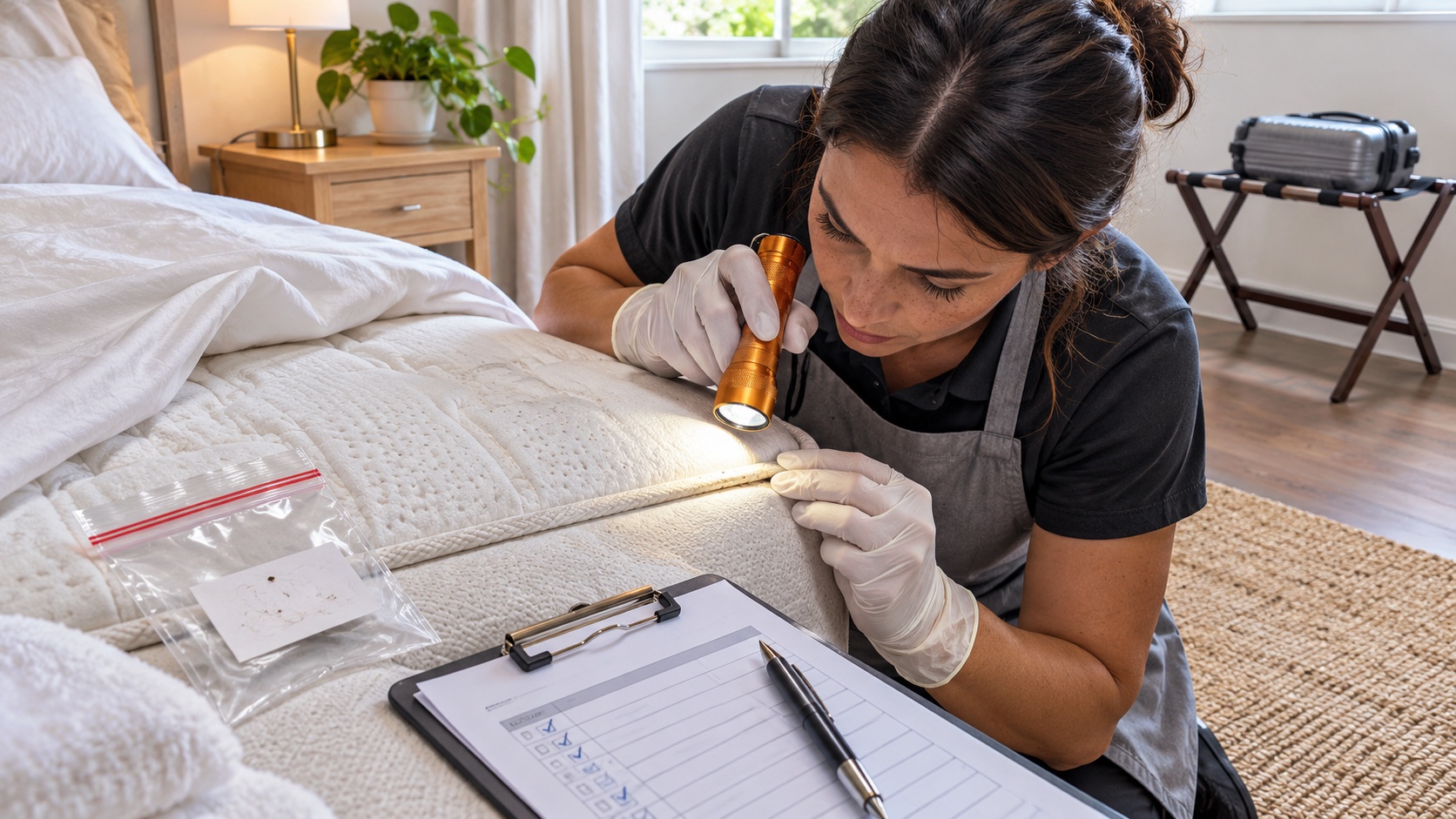
A vacation rental bed bug protocol should prevent spread, verify reports with a qualified inspection, isolate affected items and rooms, use professional treatment, document decisions, and communicate with guests without blame or an unsupported diagnosis.
Bed bugs can be introduced in clean properties and are difficult to confirm from one bite or photograph. Improvised pesticides or moving linens through the building can worsen the problem. This guide gives hosts and property managers a practical system they can document, test, and improve without relying on vague promises or unsupported claims.
What is a vacation rental bed bug protocol?
It is a written sequence for prevention, inspection, containment, treatment, clearance, guest support, and recordkeeping when bed bugs are suspected or confirmed.
Treatment methods and pesticide use depend on local law, label directions, building conditions, pest species, and licensed-professional requirements. A host should not promise that one visual check proves a room is clear. Requirements can vary by jurisdiction, building, insurer, platform, and property type, so confirm the rules that apply to the specific listing before changing operations.
How the system works in practice
Train turnover staff to recognize signs, stop movement from the affected room, collect neutral evidence, contact a pest professional, manage bookings and guest communication, and reopen only under a documented clearance standard. A dependable process connects the listing, pre-arrival communication, property setup, staff instructions, incident response, and post-stay records. If one part contradicts another, guests and workers will follow different versions.
Prevention
Reduce clutter, use inspectable bed frames and encasements where appropriate, manage laundry routes, and inspect high-risk seams and joints. Define who owns this control, when it is checked, what evidence is retained, and what happens when the standard is not met.
Report intake
Record location, timing, observations, photographs, and travel of items without accusing the guest. Define who owns this control, when it is checked, what evidence is retained, and what happens when the standard is not met.
Containment
Keep suspect linens and objects sealed and avoid moving them into clean areas. Define who owns this control, when it is checked, what evidence is retained, and what happens when the standard is not met.
Professional verification
Use a qualified pest professional to inspect and recommend treatment. Define who owns this control, when it is checked, what evidence is retained, and what happens when the standard is not met.
Booking control
Block or relocate as needed so new guests and workers are not exposed to an unresolved room. Define who owns this control, when it is checked, what evidence is retained, and what happens when the standard is not met.
Clearance and monitoring
Follow the treatment provider’s follow-up plan and document the basis for reopening. Define who owns this control, when it is checked, what evidence is retained, and what happens when the standard is not met.
Step-by-step implementation plan
- 1. Stop room turnover. Do not send the next cleaner or guest into the suspect room.
- 2. Acknowledge the report. Respond calmly and request useful observations without disputing symptoms.
- 3. Preserve evidence. Photograph signs and seal specimens only when staff can do so safely.
- 4. Limit movement. Bag textiles in the room and separate equipment used there.
- 5. Call a professional. Share the property layout, observations, occupancy, and prior treatment history.
- 6. Control reservations. Block affected inventory and coordinate guest support through the booking channel.
- 7. Complete treatment and follow-up. Follow label, legal, and professional instructions exactly.
- 8. Review the route of spread. Correct laundry, storage, furniture, or staff practices that could move pests.
Do not launch the process only as a document. Test it at the property, ask the person responsible to complete it without coaching, and correct unclear instructions before the next reservation.
Example: a controlled pilot at one property
Run a tabletop exercise with the cleaner, manager, laundry provider, and pest vendor. Start with a guest photo at checkout and verify that everyone knows what to stop, seal, record, and communicate. The pilot should have a start date, responsible owner, pass/fail criteria, and a short review meeting. Expand it only after the team can reproduce the result and the records are complete.
Benefits hosts can evaluate
The value of vacation rental bed bug protocol should be judged through operational evidence, not a guaranteed revenue claim. Useful measures include completion rate, response time, repeated exceptions, guest questions, vendor rework, unresolved incidents, and the age of the last verified inspection.
- Faster containment of a credible report. Record a baseline before the change so the comparison is meaningful.
- Less accidental movement of suspect textiles and tools. Record a baseline before the change so the comparison is meaningful.
- Consistent guest communication without blame. Record a baseline before the change so the comparison is meaningful.
- A traceable basis for treatment and reopening. Record a baseline before the change so the comparison is meaningful.
How to estimate cost and workload
Separate one-time setup from recurring work. Setup may include property inspection, equipment, professional advice, photography, templates, staff training, and configuration. Recurring work may include testing, replacement, monitoring, reconciliation, support, storage, and periodic review.
Request itemized vendor proposals and record assumptions such as property size, number of reservations, response coverage, service hours, replacement cycle, and taxes. A low purchase price can be misleading when installation, false alerts, staff time, or failed handoffs create recurring cost.
Use a small contingency for failures, but do not publish an invented savings figure. The decision should compare the expected workload and risk exposure with the current process and with realistic alternatives.
Training and guest communication
Train staff with the actual property, not only a shared document. Ask each role to demonstrate its task, find the current instruction, identify an exception, and explain the escalation route. Remove obsolete versions so a cleaner, co-host, or responder cannot accidentally follow an old process.
Guest-facing language should be short, specific, and timed to the decision. Put booking conditions in the listing, arrival details in the pre-arrival message, property instructions where the task occurs, and urgent guidance in an accessible emergency section. Do not hide a material restriction in a long house manual.
State what the guest needs to do, why it matters when useful, and how to get help. Avoid threats, ambiguous penalties, or claims that exceed platform policy, the rental agreement, or local law.
Testing, review dates, and change control
Test normal use and at least one failure path. Confirm that alerts reach a real person, backup access works, documents open on mobile, vendors have current instructions, and the team can act when the primary contact is unavailable.
Assign a version date to the standard and review it after an incident, property change, platform update, vendor change, or new legal requirement. Record who approved the revision and which listings, messages, signs, and staff documents were updated.
Operational metrics to monitor
Choose a small set of measures that reveal whether the process is being followed. Track completion before the deadline, exceptions by cause, time to acknowledge, time to close, repeated failures at the same property, vendor rework, guest questions, and overdue corrective actions.
Do not use a single percentage to hide a serious safety or compliance failure. Review the underlying records and separate leading indicators, such as missed checks or offline devices, from outcomes, such as an incident, refund, complaint, or cancellation.
Compare like periods and record external changes before drawing conclusions. A new vendor, renovation, severe weather, platform update, or different guest mix may explain a change. Use the data to select the next corrective action, not to manufacture a marketing claim.
Risks, limitations, and common mistakes
Diagnosing from bites
Skin reactions have many causes and do not confirm bed bugs. The corrective action should address the cause, not merely add another message that staff or guests may ignore.
Using foggers or unapproved chemicals
Improper pesticide use can be ineffective, unsafe, or illegal. The corrective action should address the cause, not merely add another message that staff or guests may ignore.
Carrying loose linens through the property
Unsealed movement can spread insects to clean rooms, vehicles, or laundry areas. The corrective action should address the cause, not merely add another message that staff or guests may ignore.
Reopening after one quick check
Eggs and hidden insects may require follow-up under the professional plan. The corrective action should address the cause, not merely add another message that staff or guests may ignore.
Documentation and privacy controls
Keep the initial report, room status, photographs, inspection findings, treatment scope, pesticide documents, vendor license where applicable, follow-up results, booking decisions, guest messages, and reopening approval. Keep only information needed for a defined operational, contractual, safety, accounting, or legal purpose. Limit access by role, use secure storage, and set a retention period. Never place access codes, identity documents, payment data, or private guest messages in an open team channel.
Separate facts from assumptions. A useful record states what was observed, when it happened, who verified it, what action was taken, and whether the issue was closed. Avoid emotional labels and unsupported conclusions.
Roles and escalation
- Owner or asset manager: approves the standard, budget, legal review, and exceptions.
- Property manager: maintains the workflow, trains vendors, checks records, and closes recurring gaps.
- Cleaner or inspector: completes property-level checks and reports exceptions with time-stamped evidence.
- Local responder: handles urgent, in-person tasks within a defined safety and authority limit.
- Guest communication lead: keeps messages accurate, timely, proportionate, and consistent with platform rules.
Suspected spread to multiple rooms, unsafe chemical exposure, disputed treatment, or a medically vulnerable guest requires specialized professional and platform support. Emergency services should handle immediate threats to life or property. Platform support, insurers, payment providers, licensed professionals, or legal advisers should be involved when the issue exceeds the team’s authority.
Two practical scenarios
A guest reports bites but no visible insect
The host acknowledges the concern, offers the appropriate support path, blocks the room for qualified inspection, and avoids declaring the cause before evidence exists.
A cleaner finds spotting at a headboard
The room is closed, tools and linens are contained, a pest professional inspects adjacent areas, and the property follows the treatment and monitoring plan before reopening.
Quality-control checklist
- Training: Staff can identify common signs
- Stop: Next turnover and booking paused
- Evidence: Observations recorded neutrally
- Contain: Textiles and tools sealed
- Vendor: Qualified pest contact available
- Scope: Adjacent rooms considered
- Treatment: Label and legal directions followed
- Guests: Communication avoids blame
- Follow-up: Monitoring plan completed
- Reopen: Clearance basis documented
Schedule the next review now. A checklist without an owner and review date becomes an archive, not a control.
Frequently asked questions
Do bed bugs mean a property is dirty?
No. They can be introduced through luggage, furniture, clothing, and other movement; cleanliness alone does not prevent introduction.
Can a host confirm bed bugs from a bite?
No. Bites and skin reactions are not a reliable standalone diagnosis.
Should all furniture be discarded?
Not automatically. A pest professional can advise what can be treated, isolated, or must be removed.
Can cleaners spray retail pesticide?
Only products and uses allowed by law and the label should be considered, and professional treatment is often the safer operational standard.
When can the room reopen?
After the prescribed treatment, follow-up, and clearance criteria are completed and documented.
Answer-engine summary
Stop turnover, contain suspect materials, verify professionally, treat under a documented plan, communicate neutrally, and reopen only after follow-up criteria are met.
- Bites do not confirm bed bugs.
- Contain before moving linens.
- Use qualified inspection.
- Avoid improvised pesticides.
- Document the reopening decision.
Official sources and related PainHost guides
Final recommendation
Contain first, verify professionally, and make reopening a documented decision rather than a guess.
Give cleaners a one-page stop-and-report card and confirm that your pest vendor can respond during occupied periods. Review the first month of records, correct repeated exceptions, and keep the public listing aligned with what guests will actually find.

Artigos Relacionados



Sobre o Autor
