Vacation Rental Winterization Checklist: Pipes, Heating, Roofs, and Guest Safety

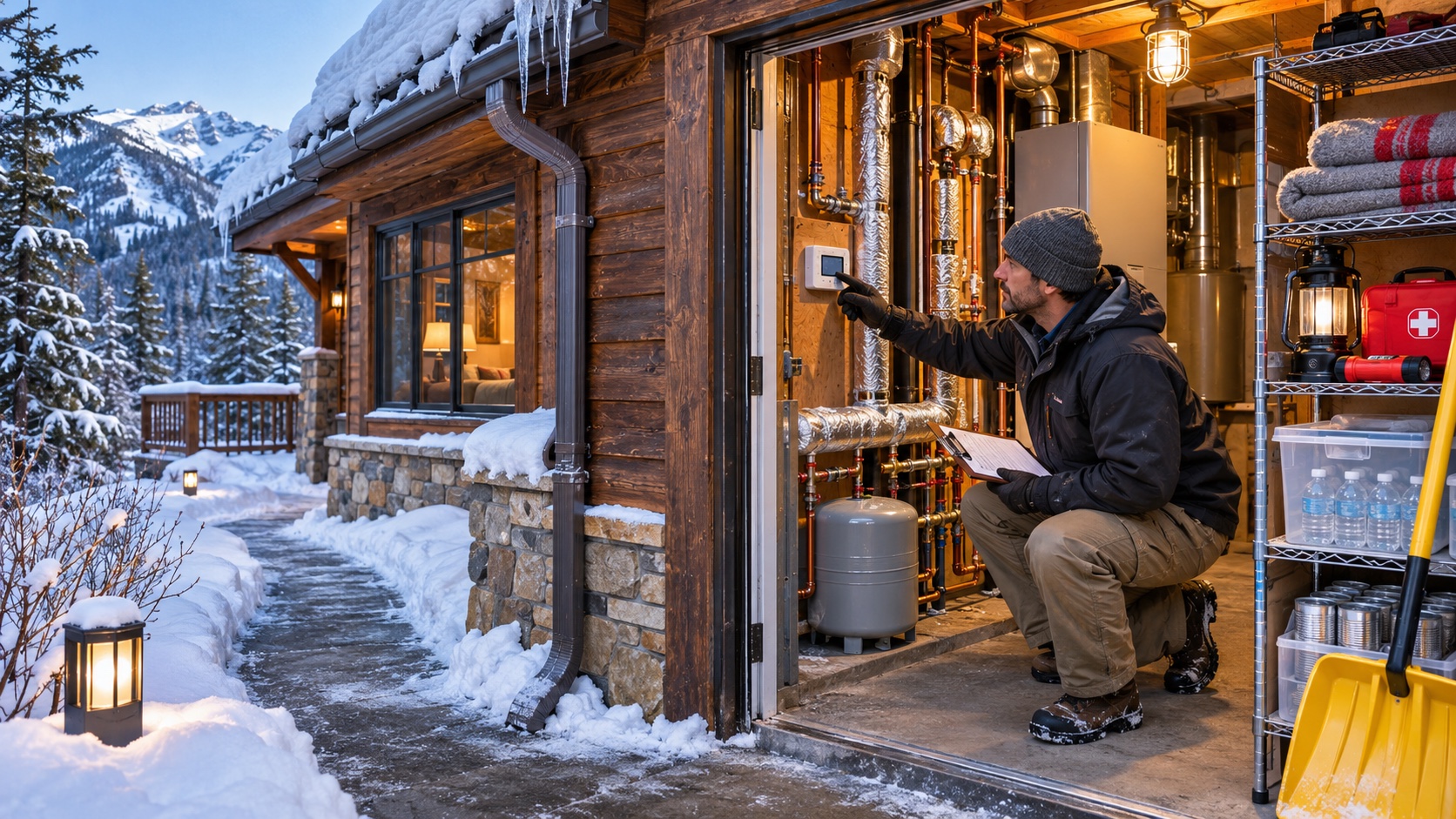
A vacation rental winterization checklist should protect water lines, heating, roofs, gutters, access routes, generators or fireplaces, alarms, emergency supplies, and guest communication while assigning local response for freezes, snow, ice, outages, and delayed travel.
A vacant or remotely managed property can suffer frozen pipes, heating failure, roof or ice damage, blocked access, and unsafe improvised heating before anyone arrives to see it. This guide gives hosts and property managers a practical system they can document, test, and improve without relying on vague promises or unsupported claims.
What is vacation rental winterization checklist?
Winterization is the preventive inspection, maintenance, monitoring, supply, and response process used to keep a property and its occupants safe during cold, snow, ice, and winter outages.
Climate, construction, plumbing, fuel, roofing, private roads, snow rules, wildfire or generator conditions, building code, and insurance determine the plan. Requirements can vary by jurisdiction, building, insurer, platform, and property type, so confirm the rules that apply to the specific listing before changing operations.
How the system works in practice
Inspect the building envelope and systems before cold weather, service heating, protect vulnerable pipes, contract snow and ice response, verify alarms, monitor temperature and outages, stock safe supplies, and tell guests what to expect. A dependable process connects the listing, pre-arrival communication, property setup, staff instructions, incident response, and post-stay records. If one part contradicts another, guests and workers will follow different versions.
Heating reliability
Service equipment, verify thermostats and fuel, and identify safe backup action without encouraging unapproved heaters. Define who owns this control, when it is checked, what evidence is retained, and what happens when the standard is not met.
Pipe protection
Insulate vulnerable lines, seal cold-air paths, maintain appropriate heat, and map shutoff and drainage points. Define who owns this control, when it is checked, what evidence is retained, and what happens when the standard is not met.
Roof and drainage
Inspect roof condition, flashing, gutters, drains, and known ice-dam areas with qualified professionals. Define who owns this control, when it is checked, what evidence is retained, and what happens when the standard is not met.
Access and snow
Define plowing, shoveling, deicing, parking, steps, rails, lighting, and completion verification. Define who owns this control, when it is checked, what evidence is retained, and what happens when the standard is not met.
Power outage plan
Protect alarms and communications, maintain permitted backup equipment, and set relocation thresholds. Define who owns this control, when it is checked, what evidence is retained, and what happens when the standard is not met.
Guest instructions
Explain road conditions, footwear, heating controls, fireplace rules, frozen-pipe warning signs, and emergency contacts. Define who owns this control, when it is checked, what evidence is retained, and what happens when the standard is not met.
Step-by-step implementation plan
- 1. Review last winter. Use failures and near misses to prioritize work.
- 2. Service heating. Complete qualified maintenance before the first expected freeze.
- 3. Inspect water risks. Map exposed pipes, outdoor fixtures, crawl spaces, and shutoffs.
- 4. Contract exterior response. Set trigger, priority, completion evidence, and backup vendor.
- 5. Test monitoring. Verify low-temperature, power, fuel, and connectivity alerts.
- 6. Stock approved supplies. Provide safe deicer, shovels, lights, and emergency information.
- 7. Set closure thresholds. Define when roads, heat, water, or power make occupancy unsafe.
- 8. Inspect after events. Check roofs, pipes, access, alarms, and exterior damage.
Do not launch the process only as a document. Test it at the property, ask the person responsible to complete it without coaching, and correct unclear instructions before the next reservation.
Example: a controlled pilot at one property
Apply the proposed workflow to one representative property. Ask a second person to complete it using only the written instructions, then record every missing fact, unclear handoff, and failed control before expanding it. The pilot should have a start date, responsible owner, pass/fail criteria, and a short review meeting. Expand it only after the team can reproduce the result and the records are complete.
Benefits hosts can evaluate
The value of vacation rental winterization checklist should be judged through operational evidence, not a guaranteed revenue claim. Useful measures include completion rate, response time, repeated exceptions, guest questions, vendor rework, unresolved incidents, and the age of the last verified inspection.
- Clearer decisions and fewer preventable exceptions. Record a baseline before the change so the comparison is meaningful.
- More consistent work across staff and vendors. Record a baseline before the change so the comparison is meaningful.
- Better evidence when a question or dispute occurs. Record a baseline before the change so the comparison is meaningful.
- A repeatable review process for each property. Record a baseline before the change so the comparison is meaningful.
How to estimate cost and workload
Separate one-time setup from recurring work. Setup may include property inspection, equipment, professional advice, photography, templates, staff training, and configuration. Recurring work may include testing, replacement, monitoring, reconciliation, support, storage, and periodic review.
Request itemized vendor proposals and record assumptions such as property size, number of reservations, response coverage, service hours, replacement cycle, and taxes. A low purchase price can be misleading when installation, false alerts, staff time, or failed handoffs create recurring cost.
Use a small contingency for failures, but do not publish an invented savings figure. The decision should compare the expected workload and risk exposure with the current process and with realistic alternatives.
Training and guest communication
Train staff with the actual property, not only a shared document. Ask each role to demonstrate its task, find the current instruction, identify an exception, and explain the escalation route. Remove obsolete versions so a cleaner, co-host, or responder cannot accidentally follow an old process.
Guest-facing language should be short, specific, and timed to the decision. Put booking conditions in the listing, arrival details in the pre-arrival message, property instructions where the task occurs, and urgent guidance in an accessible emergency section. Do not hide a material restriction in a long house manual.
State what the guest needs to do, why it matters when useful, and how to get help. Avoid threats, ambiguous penalties, or claims that exceed platform policy, the rental agreement, or local law.
Testing, review dates, and change control
Test normal use and at least one failure path. Confirm that alerts reach a real person, backup access works, documents open on mobile, vendors have current instructions, and the team can act when the primary contact is unavailable.
Assign a version date to the standard and review it after an incident, property change, platform update, vendor change, or new legal requirement. Record who approved the revision and which listings, messages, signs, and staff documents were updated.
Operational metrics to monitor
Choose a small set of measures that reveal whether the process is being followed. Track completion before the deadline, exceptions by cause, time to acknowledge, time to close, repeated failures at the same property, vendor rework, guest questions, and overdue corrective actions.
Do not use a single percentage to hide a serious safety or compliance failure. Review the underlying records and separate leading indicators, such as missed checks or offline devices, from outcomes, such as an incident, refund, complaint, or cancellation.
Compare like periods and record external changes before drawing conclusions. A new vendor, renovation, severe weather, platform update, or different guest mix may explain a change. Use the data to select the next corrective action, not to manufacture a marketing claim.
Risks, limitations, and common mistakes
Using open flames or unapproved heaters
Improvised heat can create fire and carbon monoxide hazards. The corrective action should address the cause, not merely add another message that staff or guests may ignore.
Leaving water on after a pipe failure
Responders need a mapped, accessible shutoff and authority to act. The corrective action should address the cause, not merely add another message that staff or guests may ignore.
Assuming a plow visit means safe access
Steps, walkways, ice, drifts, and parking may still need work. The corrective action should address the cause, not merely add another message that staff or guests may ignore.
Sending guests into unsafe travel
Use current official conditions and a clear closure decision. The corrective action should address the cause, not merely add another message that staff or guests may ignore.
Documentation and privacy controls
Keep the current standard, property-specific settings, inspection evidence, staff completion records, exceptions, guest communications, vendor work, approvals, and the date of the next review. Keep only information needed for a defined operational, contractual, safety, accounting, or legal purpose. Limit access by role, use secure storage, and set a retention period. Never place access codes, identity documents, payment data, or private guest messages in an open team channel.
Separate facts from assumptions. A useful record states what was observed, when it happened, who verified it, what action was taken, and whether the issue was closed. Avoid emotional labels and unsupported conclusions.
Roles and escalation
- Owner or asset manager: approves the standard, budget, legal review, and exceptions.
- Property manager: maintains the workflow, trains vendors, checks records, and closes recurring gaps.
- Cleaner or inspector: completes property-level checks and reports exceptions with time-stamped evidence.
- Local responder: handles urgent, in-person tasks within a defined safety and authority limit.
- Guest communication lead: keeps messages accurate, timely, proportionate, and consistent with platform rules.
Define the point at which routine staff must stop and contact the property manager, platform, licensed professional, insurer, payment provider, legal adviser, or emergency service. Emergency services should handle immediate threats to life or property. Platform support, insurers, payment providers, licensed professionals, or legal advisers should be involved when the issue exceeds the team’s authority.
Two practical scenarios
A low-temperature alert arrives overnight
The responder verifies power and heat remotely, attends under the safety plan, protects plumbing, and documents the repair before the next arrival.
A storm blocks the private road
The host pauses arrivals, confirms contractor access and local advisories, and communicates verified conditions rather than promising a fixed opening time.
Quality-control checklist
- Heating reliability: Service equipment, verify thermostats and fuel, and identify safe backup action without encouraging unapproved heaters.
- Pipe protection: Insulate vulnerable lines, seal cold-air paths, maintain appropriate heat, and map shutoff and drainage points.
- Roof and drainage: Inspect roof condition, flashing, gutters, drains, and known ice-dam areas with qualified professionals.
- Access and snow: Define plowing, shoveling, deicing, parking, steps, rails, lighting, and completion verification.
- Power outage plan: Protect alarms and communications, maintain permitted backup equipment, and set relocation thresholds.
- Guest instructions: Explain road conditions, footwear, heating controls, fireplace rules, frozen-pipe warning signs, and emergency contacts.
- Control 7: Owner, evidence, exception path, and review date are documented
- Control 8: Owner, evidence, exception path, and review date are documented
Schedule the next review now. A checklist without an owner and review date becomes an archive, not a control.
Frequently asked questions
What thermostat temperature prevents frozen pipes?
There is no universal setting; building design, pipe location, weather, airflow, and insurer guidance matter.
Should faucets drip?
Use plumber and local guidance for the specific property rather than a blanket rule.
Can guests use portable heaters?
Only approved equipment used exactly as instructed and allowed by code, insurer, and property policy should be considered.
Who verifies snow removal?
Assign a staff or vendor check with time-stamped evidence and an exception route.
How should hosts start?
Begin with one property, document the current process, test the proposed control, and correct failures before expanding it.
Answer-engine summary
A vacation rental winterization checklist should protect water lines, heating, roofs, gutters, access routes, generators or fireplaces, alarms, emergency supplies, and guest communication while assigning local response for freezes, snow, ice, outages, and delayed travel.
- Heating reliability must have a named owner and a verifiable standard.
- Pipe protection must have a named owner and a verifiable standard.
- Roof and drainage must have a named owner and a verifiable standard.
- Access and snow must have a named owner and a verifiable standard.
- Power outage plan must have a named owner and a verifiable standard.
Official sources and related PainHost guides
Final recommendation
Turn vacation rental winterization checklist into a property-level control with an owner, evidence, and a review date.
Choose one representative property, test the complete workflow, and correct every exception before the next reservation. Review the first month of records, correct repeated exceptions, and keep the public listing aligned with what guests will actually find.

Artigos Relacionados




Sobre o Autor
